
One call and we take it all
Categories
Rubbish Recycling

Easy “Green” Kitchen Swaps You Can Get The Kids Involved In

The world is rapidly using up resources, pollution is rife in the atmosphere, our waters are contaminated, and trees are being cut down at dramatic rates. If we don’t start taking care of the environment, it’ll lead to greater global warming – which will in turn lead to bigger, more damaging storms that are guaranteed to impact the world we live in. 

As the earth’s temperature continues to rise, ice caps will melt, resulting in a major sea-level rise, and major cities and even nations will disappear. Global warming will also impact our health – with asthma and allergies increasing as pollution does. 

As parents, we need to be taking care of our children in the best ways possible – and that includes taking care of their future. We want to help children understand the world around them – and of course, to educate them on the importance of their immediate environment. Crucially, we need children to know that the little things they do now will help them secure a brighter future. 

What Does It Mean To Go Green? 

Essentially, going green brings cleaner air, safer foods and better water quality. And although it might not seem important to many people, it not only benefits the world at large, but also improves your home life in general – it gives you a sense of purpose and accomplishment. 

Kermit said – “it ain’t easy being green”, but honestly, he’s full of it. It’s actually much easier than you think. Going green is a way of life – it allows you to do everything in your power to reduce, reuse and recycle. It not only helps you to embrace things in your life that are good for the environment, but it gives you a sense of accomplishment – knowing you’re doing what you can for future generations. 

The aim of going green is to reduce pollution and resources consumption, to eliminate the amount of waste we use, to conserve natural resources such as water, and to allow the natural environment to thrive.

Benefits Of Going Green At Home

We can all play a part in going green – and it starts in the home. By making simple changes, which we’ll go into later, you can not only help the environment and play a part in slowing down global warming… you can also change your own life. By going green, you will decrease your spending, reduce your energy bills, and live a much healthier lifestyle. Here’s a little more detail on the benefits: 

  1.     Reduce energy costs: by using solar energy instead of electricity, you can save yourself around $400 per annum, per kW of solar – so if you install an 8kW system, you’ll save around $3,400 a year.
  2.     Reduce impact on the environment. By reducing the amount of plastics and non-sustainable products you use around the home, you can lower your carbon footprint.
  3.     Healthier living. By going green, you’re committing to a healthier life in general – and that includes your diet. Ditching the plastics will have you stocking up on fresh foods instead, which of course are better for you.
  4.     Preserves natural resources, which leaves more for future generations. From switching to solar energy to using bore water to irrigate your gardens, planting trees, or changing the lightbulbs you use, you’re playing a part in preservation. 

Simple Kitchen Swaps You And The Kids Can Make 

You don’t need to give your kitchen a complete overhaul. Even the smallest changes can make a huge difference. Get the kids involved, teach them what needs to be done, and try these simple kitchen swaps that will benefit you and the environment: 

Throw out the paper towels. Although they’re certainly useful, they’re also a waste of a good tree and you’re better off using cloth, washable dish towels to clean up any mess instead. Stock up so you have plenty available when you need them. Did you know that to make one tonne of paper towels, it takes 17 trees and over 75,000 litres of water? 

Have a recycle bin handy. When you have a single bin in the kitchen, it’s much faster and easier to throw away your recyclables into your general waste bin, rather than taking a walk outside. Your best bet is to have two bins, and make sure the kids know which one is for general rubbish removal and which is for recyclables. If you don’t have the space for two bins, consider a dual bin instead. 

Use natural products for heavy cleaning. Get rid of the bleaches and harsh chemicals, and stock up instead on baking soda and vinegar. You’ll be surprised at how easy it is to clean tough stains with a good combination of these simple products – and they’re kid friendly! 

Stick to oils, or a reusable spray bottle. Cooking spray is convenient, but all those aerosol chemicals are bad for the environment. The cans are also hard to recycle. Instead, stick to bottle oils, or buy a reusable oil spray bottle. 

Update your kitchenware. Non-stick cookware is all the rage and it can create delicious meals – where nothing gets left in the pan. Unfortunately, though, they’re not great for the environment! They’re coated in chemicals that are actually harmful, so shop for stainless steel or cast iron instead. While you’re in the kitchen, ditch the single-use containers and utensils. Switch to reusable BPA free dishes and bamboo utensils. And teach the kids how to wash their dishes, rather than toss them in the bin. 

Forget the plastics. To start with, get rid of any single use water bottles you might have floating around and invest in a glass or stainless-steel bottle instead. Keep this on you throughout the day for refilling. Next, ditch the plastic bags. Rather than packing the kid’s lunches in disposable bags, switch to silicone designs instead – or simply store their lunch in reusable containers. And while you’re at it, throw out the cling wrap. It can’t be recycled, and it can actually leak harmful chemicals onto your food. 

It doesn’t matter how busy your household is, you can still reduce the amount of waste you create and it only takes a few minutes. Start with just a few simple steps, and you and the kids will be feeling proud and excited for all you’re doing to help the environment. And remember, if you need rubbish removal in Sydney to help get rid of your recyclables, we can help.

Categories
Rubbish Recycling

Rubbish & Our Waterways – Why Recycling Is So Important

Rubbish in our waterways is serious – it impacts the water quality, habitat and the wildlife. From cigarette butts thrown out a car window, to plastic straws blowing in the wind, even the smallest piece of rubbish can have a huge impact. Once this rubbish hits the waterways, it can be hard to remove and once caught in an ocean current, it can float thousands of kilometres. Your plastic bottle lid that hits the water today could be shark food in New Zealand in future. 

And it joins some 12.7 million tonnes of litter that ends up in the ocean every year. Sydney Water alone is removing more than one million plastic bottles from Sydney waterways each year.

According to the World Wildlife Fund, 80 per cent of marine pollution is generated by land-based activities and it’s having a devastating effect on our oceans. If we want to protect the environment, and our future, we need to start by taking care of our waterways – and we can all play a part.

Why Rubbish In Our Waterways Is Bad 

The biggest problem with trash in the waterways is that it can harm and kill wildlife. Every year, it accounts for the death of at least 100,000 marine mammals – turtles and whales – and around one million seabirds worldwide. There are two main issues – wildlife becomes entangled in the trash or mistakes it for food. 

Entanglement can lead mammals and birds to become severely injured, even resulting in death. Seabirds commonly become entangled in fishing lines or nets, losing their ability to move and catch prey. Mammals can receive cuts from debris, and it can lead to amputation. The fact is, if animals can’t fly, swim or hunt properly – they die. 

Ingestion, on the other hand, occurs when a marine animal mistakes plastic bags, rubber, balloons, and so on, for prey and swallows them. Turtles often mistake plastic bags for jellyfish, while birds will mistake polystyrene balls for fish eggs. This can block their digestive system – making it impossible for the animals to feed property and again, they die. 

It’s not just about the wildlife though. Rubbish also makes the waterways dirty and turns tourists away – no one wants to go kayaking or snorkeling in waters that are covered in junk. 

What You Can Do If You See Rubbish 

Every little bit counts. 

If you’re spending time at the local waterways or a day on the beach, you need to start by taking care of your own. If you’ve made a mess, clean it up. Be extra careful to not leave any stray bottles or cans lying around, pick up napkins and bags – lightweight rubbish can easily be picked up by the winds or tide and make its way into a bird’s line of sight. 

If you see rubbish on the beach that hasn’t been left there by you, it doesn’t do any harm to pick it up and bin it. Consider the impact it will have on the environment if you do that – you could be saving the life of a dolphin or turtle. 

Get involved in organised clean-up events and don’t be afraid to report instances of illegal dumping to your local city council. 

How We Can Stop Rubbish Getting Into Waterways 

If you see rubbish on the ground, pick it up – that’s great. But essentially you want to avoid getting rubbish there in the first place. There are things you can do yourself to stop rubbish from spreading to stormwater drains and beaches and it starts in the home. 

Have you heard of the five Rs? 

Refuse is the first R and it’s the most important one – when you’re offered a plastic bag to carry your items, say no. Refuse to buy wasteful products. Refuse anything that isn’t recyclable. 

Reduce the amount of harmful, wasteful, non-recyclable products. Start by reducing the packet foods you buy, buy in bulk to reduce wrapping, and reduce paper waste with a No Junk Mail sticker on your mailbox. 

Re-use your water bottle – BPA Free is best. And re-use other items you may generally throw away. Forget single-use plastics – these are a major killer of marine wildlife. 

Repurpose. If you can’t reuse it, try repurposing it. Get creative. For example, rather than throwing away old cardboard boxes, keep them for crafts for the kids. Coffee mugs can become plant holders. And so on. 

Recycle as much household waste as possible. You can do this by ensuring your waste is put into the correct bin at collection time. If it doesn’t fit in the bin, you can look into getting a rubbish removal company to come and take everything away to the local recycle centre. 

Here’s our top tips: 

  1. Use your own reusable shopping bags and if you’re buying fruit and vegetables at your local supermarket, ignore the plastic bags that are provided to bunch them in. While you’re at the store, you can also choose loose veggies and fruit rather than packaged.
  2. Avoid buying bottled water – take your own out with you instead. And rather than accepting a disposable cup at your favourite café, take your own travel mug instead and ask them to fill that up.
  3. Don’t buy glitter. This can be hard if you have a little girl who loves fairy-land, but did you know glitter is made from plastic? And because the particles are so small, you can’t filter it out of wastewater.
  4. When you’re out boating, remember to bin your rubbish properly. The bins located at most ramps are for general rubbish only – which means your recyclables are going to the wrong place. Take your trash home with you, where possible, and sort it there. Just make sure you keep it secure in the trash bags so it doesn’t blow away and isn’t accessible by hungry Ibis.

By taking care of your rubbish and recyclables, you’ll be limiting the amount of waste you’re putting into the environment and as such, reducing the impact you make on the waterways. If you need assistance for rubbish removal Sydney, get in touch with our team today!

Categories
Rubbish Recycling

What Should You Do With Things That Can’t Be Recycled

To recycle, or not to recycle? That is the question – and it’s a pretty confusing one. While many recyclables are obvious, like soft drink cans and cardboard boxes, there are other items that you might throw in the recycle bin, when you shouldn’t. Or visa versa – you toss them in the regular bin when they should be sent to recycling. 

In a bid to clear things up, we’re delving deep into the world of recycling – what can’t be recycled, and what you can do with the non-recyclables. Here goes. 

What Are Non-Recyclables?

These are items that you can’t recycle in the traditional way – that’s not the say they can’t be recycled at all though. Many of the things people toss in their yellow-lid bin are actually contaminating the other items – which means, the entire bin is now non-recyclable. The following are non-recyclables: 

Plastic bags and wraps: While these can be recycled, they can’t go into your yellow bin. Instead, you need to take them to your local supermarket and dispose of them in the Redcycle bins. 

Cans, cardboard, etc – within plastic bags: Although it’s much easier to transport your recyclables to your yellow bin from the house in a garbage bag, you can’t put the garbage bag in the bin as well. If you do, you’re wasting your recycling efforts. 

Nappies: Too many people put dirty nappies into the recycle bin – which contaminates the entire bin. Not only that, but they make their way into the recycle plant and contaminate everything there as well. Bin them properly. 

Food and soils: Got some pizza boxes you need to bin? You can only put them into the yellow bin if they don’t have any pizza leftovers inside, and if they aren’t TOO greasy or cheesy. Small amounts of residue are fine in your recyclables – a bit of sauce left in the jar. But big chunks of food should be binned separately. 

Cords and string: If you have anything that can get tangled around other items in the bin, you shouldn’t be putting it in there. That includes Christmas lights and headphones, garden hoses and wires. They actually cause the equipment at the recycle centre to snag, shutting down operations. 

Toxic materials: Anything that is ignitable, toxic or corrosive should not be recycled. This includes things like oil paint and motor oil, poisons and petrol. If the bottle is empty that’s been holding these, throw it in the trash – not the recycling. If you have large amounts, you might consider a rubbish removal company to take them away for you safely. 

Cleaning products: Like the above, you should also not recycle your cleaning products and containers. Check the label and if they are water-soluble, you can generally wash it down the drain. If it’s solid, such as sponges, bin it. And anything containing bleach should be flushed in small amounts. 

Batteries: These are corrosive by nature and the ingredients in batteries are hazardous, so it’s important that you dispose of them properly. You shouldn’t put these in your general trash either, but rather take them to a recycling facility where they can be disposed of properly. 

Chip packets: This might surprise you, but any type of multi-layer bag cannot be recycled. That means, any bags or packets that you can roll up into a ball should not be put in your recyclables. That even includes baby food pouches and chocolate wrappers. 

Electronics: Computers, TVs, phones, keyboards, even your smoke detectors – these are all unsuitable for your yellow bin and need to be disposed of properly. Take them to the local recycle centre yourself or have a rubbish removal company pick them up for you. 

Clothing: If you have clothes you’re not wearing anymore, rather than putting them in the yellow bin or the general trash, consider donating them instead. There are people in need all over the country and if they’re in good condition, you’ll be helping someone else with your unwanted goods. 

Wood: It might surprise you, but wood is actually not recyclable and shouldn’t be put in your recycle bin. That includes paddle pop sticks! If you have a large number of wood items you want to recycle, see if your local community has a program for timber recycling. 

Light bulbs: If you put light bulbs into your recycle bin, you risk them cracking and glass contaminating the other items in there. You can either take them to your local recycle centre, or dispose of them in your regular rubbish – just be sure to wrap them in paper first. 

Our top tip: when in doubt, leave it out. 

What To Do With Your Non-Recyclables 

So, what can you do with all those non-recyclables? There are a few options. 

Try to salvage as much of the item as possible and repurpose them. For example, if your pizza box has too much grease for recycling, see if you can pull it apart, get rid of the bits that still have food on them, and use the scraps for crafts instead. 

Get your creativity hat on. If you have broken glass, learn how to make a mosaic decoration and design your own photo frames or Christmas decorations. If you have Styrofoam, cut it into egg shapes and get the kids to paint it for Easter – it’ll save a bundle on Easter decorations. 

Other creative ideas include reusing paper coffee cups for growing plants! Poke a hole in the bottom, fill it with soil, add a seed and watch it grow! And using old milk or water bottles for creating ice packs. Simply clean them out, fill them with water, and freeze them. They’re perfect to put in your esky for a summer barbecue at the beach. 

When it comes to repurposing, the options are only limited by your imagination. If you prefer to get rid of all your rubbish, however, that’s where a rubbish removal specialist can help. 

Rubbish removal Sydney, and beyond 

Rubbish removal companies are there to do the dirty work for you. It doesn’t matter if you have a large amount of recyclables you need taken away, or a small box, rubbish removalists are trained to deal with it. They’ll come to your house and pick up anything you don’t want anymore, then they’ll take it straight to the local recycle centre. If it’s donatable, such as furniture, they’ll instead take it to a local charity. With rubbish removal services, you can rest assured your recyclables are going to the right place. And there’ll be no mess left behind. 

Cheapest Load of Rubbish are your rubbish removal Sydney specialists so if you need advice or to make a booking, get in touch today.

Categories
Rubbish Recycling

Fighting Your Homes War On Waste and How To Win

Australia is, unfortunately, one of the most wasteful countries anywhere in the developed world, but it’s not just us down under. The entire population of our planet is actually responsible for discarding a container ship full of rubbish every couple of hours. Just thinking about all that trash is disheartening in itself because the vast majority of it will end up in landfill.

Thankfully, it’s not all bad news. Australians everywhere who are passionate about protecting our beautiful country have already started signing up to fight in the war on waste. As a nation we need to come together as one and truly understand the negative effect that our excess rubbish has been having on the environment.

You too can help create a cleaner and greener community from the comfort of your home. It’s all about learning the 4 Rs of Reduce, Reuse, Repurpose, and Recycle. Now’s the time for all proud Australians to get the whole family involved. Start by reflecting on how we manage our waste, learning what goes in each bin, understanding where our trash goes, and teaching ourselves new green habits.

How To Clean Out Your House Room By Room

Clutter is a problem for us all. In fact, you don’t even need to be moving out or planning a renovation to notice too much of your stuff is cluttering up your house. Even larger size properties can still fill up with possessions and heaps of other stuff. Having all that extra mess around your home can very quickly become a very frustrating issue, especially when it comes to going through the mess to organise and remove it all.

That’s why as daunting as it may seem, regularly cleaning out your house room by room can have a massive impact on reducing the build-up of clutter. Before you start going through all the junk in each room, it’s always a good idea to take a step back first and figure out a plan of attack. Look at all of the items you have in each room and take note of what you want to keep and which items you’re most likely going to get rid of. Then you’ll need to think about how you’re going to discard the excess junk.

There are a number of different disposal options available, from normal wheelie bins, to council curb-side pick-up, to collection from a professional service like Cheapest Load Of Rubbish. In order to decide which one of these options will be most suitable for you is going to depend on how much junk you need discarded and whether you want it gone today, or you are okay waiting until your local council decides to arrange it.

No matter what rubbish collection method you decide to use, the first thing you need to do when you start cleaning out each room is to move everything you want to keep to another room. Then move anything that is obviously broken, damaged, and other junk outside to wherever your trash collection point is going to be. This includes throwing out all faulty furniture, broken appliances, junk accessories, and unsalvageable clothing to avoid accumulating future clutter and waste.

Remember that just because something isn’t working, doesn’t automatically mean that it is rubbish. This is where the 4 Rs of Reduce, Reuse, Repurpose, and Recycle come into play. In order to reduce the amount of waste on our planet, Cheapest Load of Rubbish will check if your junk can be reused or repurposed by a local charity first. If that’s not possible, we’ll then recycle whatever we can from your trash and finally we will discard whatever is left over at a local transfer station.

What To Do With Old Furniture, Electronics, White Goods

Most of our household appliances and furniture don’t last as long as they used to, despite how much money we spend on them. It seems that their quality has declined considerably over the last 50 years. Sometimes broken appliances get thrown in the trash, whereas others just get put somewhere “out of the way” so that we can “get it fixed one day” or just deal with it another day.

It doesn’t take long for these broken appliances to start taking up valuable storage room around your home, in the back of kitchen cupboards, under the laundry basin, and stacked on shelves in the garage. Which is such a waste, when many unused or faulty appliances can be repaired and reused, or donated so they can be repurposed and rehoused. Always remember the 4 Rs of Reduce, Reuse, Repurpose, and Recycle.

But when your appliances have definitely packed it in and are simply unrepairable, you can ask if the delivery company can remove the old one for free. If not, Cheapest Load of Rubbish is here to help. Many old and broken furniture, white goods, and electronics can be recycled by reusing their parts in other products. If not, they can be taken apart and recycled in other ways. If you’re not sure whether or not your old appliances can be repurposed or recycled, Cheapest Load of Rubbish can ensure they are removed and dealt with appropriately and safely.

Keep Your Home Tidier And Help The Environment At The Same Time

The Cheapest Load of Rubbish team are always here to help by removing your trash and junk using the most environmentally safe methods. Our team of experts can collect all of your residential trash today so that your home is always looking clean and tidy, while also looking after the environment. Just get in touch with us today so we can talk about how we can help with your trash problems.

So many Australians are already helping us win the war on waste with the 4 Rs of Reduce, Reuse, Repurpose, and Recycle. If you care about the environment and health of our planet, you should also take some responsibility and get involved. Even the smallest individual changes we make as communities such as reducing, reusing and recycling at home has already started adding up and is now having a massive impact on the world.

Categories
Articles

Recycling For Beginners – Where To Start

If you want to make a difference to the state of the environment, one of the easiest places to start is in the home. Recycling might seem like a timewaster, but it actually has positive effects on the planet, and your mindset. It not only reduces your personal carbon footprint and pollution in general, it can also make you feel happier knowing you’re playing a positive part in the future. If you’re new to recycling, here are the essentials you need to know to help get you off the ground: 

What is recycling and why is it important?

Recycling is the process where used materials are broken down and reused or remade into new products. By doing this, it limits the waste of materials that would be otherwise useful and decreases the amount of air and water pollution in the environment by reducing the need for extraction, refining and processing of raw materials. Recycling also reduces the amount of landfill, which is one of the main causes of greenhouse gas. By paying more attention to your trash, you could contribute to saving over 700 million tonne of CO2 every year. 

How To Start Recycling

There are plenty of steps you can take to recycle. Start with the 4 Rs: Reduce, Reuse, Repurpose and Recycle. Then make simple changes:

Skip the plastic bags. Supermarkets now provide reusable bags, rather than plastic, so be sure to load up on these and keep them somewhere handy. You might also consider keeping your fresh fruit and veggies loose when you do your groceries, rather than using the roll bags they provide. 

Don’t throw out scrap paper, but rather, use it for crafts with the kids. You can do the same sort of thing with old jars and containers. Don’t be afraid to get creative and have a little fun with what you have available. 

Avoid using paper napkins and towels and opt for cloth ones instead. These will reduce your paper consumption and they are easy enough to wash. You could also consider cloth nappies and reusable period undies rather than sanitary napkins. 

Other things you can do include starting a compost pile so you can recycle any food waste – and save money on fertilizer for the garden at the same time! You can also upcycle or donate old furniture, clothing and other household items; and get to know your local Container Deposit Scheme (Return and Earn in NSW), set up as an incentive that gives you a cash refund on any containers you return. 

Finally, set up a recycle bin next to your regular rubbish bin. Indoors, this is as simple as buying yourself two bins, one for recyclables and one for general trash. Outdoors, it’s even easier. Every home in Australia should have a bin with a yellow lid – if you don’t, get in touch with your local City Council and order one. They’re free. Your yellow bin is for recyclables only, and it’s picked up by your local garbos every two weeks. However, recycling effectively isn’t as simple as throwing all your bottles and paper into that bin and waiting for collection.

What Can Be Recycled?

In general, there are five materials that can be recycled. Cans made from aluminium and steel; glass bottles and jars; paper products, including cardboard, printed paper, magazines; food and beverage cartons, such as milk cartons and soup cartons; and plastics that have the number 1 or 2 in the recycle symbol – including water bottles, some jugs and tubs, and so on. With an extensive list, it’s probably easier to talk about what you can’t recycle instead… 

What Can’t Be Recycled?

While most every day items can be recycled in some form or another, there are a number of items that end up as landfill. These include:

  • Oils
  • Medical waste
  • Polystyrene
  • Garden waste
  • Disposable nappies
  • Plastic bags
  • Recyclables that you’ve thrown out IN plastic bags
  • Bubble wrap
  • Ovenware
  • Ceramics
  • Light bulbs
  • Plastic cups and plates
  • Straws
  • Window glass
  • Chip packets
  • Cutlery
  • Plastic toys

If you’re not sure, do a simple search online. 

Tip: You can generally recycle anything made from cardboard or paper, and some plastics. That doesn’t mean you can throw all these into your yellow bin, though, so check with your local council for details on what can and can’t be included. 

Anything that can’t be recycled can go in your regular rubbish bin, or can be taken to the local transfer station.

Recyclables You Might Not Know About

There are a range of other items you can recycle as well, though these are less commonly recognised, including:

  • Lead acid batteries
  • Mobile phones
  • Soft plastics
  • Garden waste
  • Organic waste
  • Scrap metal
  • Old clothing, blankets and sheets
  • Printer cartridges
  • Electronic items
  • Household chemicals
  • Chemical containers

To recycle these, you may need professional assistance as they must be handled correctly. 

Avoid Contamination 

While filling your yellow bin is great, if it’s not done properly, it’s no good. As such, it’s essential that you take note of items that may cause contamination. For example, although your pizza box is recyclable, if there is any leftover pizza in it – it spoils the process. If your paper bag from your KFC lunch has a lot of oil attached, it’s rubbish. Wine or water bottles with the lid still on them? Rubbish. But if you take the lid off, you can recycle them. 

There’s no need to rinse your containers before putting them in the bin, as long as they are empty and dry. And if you’re not sure on which plastics you can recycle, do the scrunch test. If you can scrunch the plastic into a ball – don’t put it in your yellow bin. Instead, you can take this to the REDcycle bin at your local supermarket. 

How Can Cheapest Load Of Rubbish Help?

The good news is that if you’re unsure where to take your rubbish, Cheapest Load of Rubbish is just a phone call away. Cheapest Load Of Rubbish are rubbish removal experts in Sydney region, providing everything from warehouse rubbish removal and residential rubbish removal, to demolition rubbish removal and office rubbish removal. We ensure your recyclables are taken to the local recycling centre or, if they are in good enough condition, we’ll take them straight to a local charity. If your items can’t be recycled, we’ll take them to the local transfer station. Best of all, we will clean up when we go – leaving only footprints!

Categories
Articles

The Basics of Return And Earn

Statistics have shown that NSW used to throw away approximately 160 million drink containers each year. The annual cost for local communities to clean up and manage all these containers was also pretty high at almost $200 million. In order to help create a pollution solution, the Return and Earn container deposit scheme was launched in December of 2017.

What Is The Return And Earn Scheme?

Created by the NSW Government, the Return and Earn initiative is the state’s largest ever litter reduction program which encourages people to collect and return recyclable items. Individuals, households, schools, and charitable organisations are all able to take aluminium and plastic containers to any Return and Earn collection location where they will earn 10 cents for each eligible piece.

In the first 2 years alone, the Return and Earn scheme has had over 3 billion containers collected and returned to reverse vending machines, automated depots, and over the counter locations, all for 10 cents a pop. It doesn’t matter if who originally paid for the container, or if it was litter that was picked up from the side of the road. And the more eligible containers returned to the more cold hard cash you can make.

The scheme has already had a massively positive and powerful impact on the environment by reducing the total amount of littered empty containers in our communities. The money it has injected into our state economy has also been huge as refunds add up very quickly, eventually stretching a long way beyond just a 10 cent value.

Where Can You Return And Earn?

There are plenty of Return And Earn collection points in both regional and metropolitan priority collection areas of New South Wales. There are many different types of Return And Earn collection locations throughout the state, which include reverse vending machines, recycling centres, and automated depot sites, as well as over the counter locations like at local shops and inside shopping centres.

The state has been divided into 7 separate zones in total, and TOMRA Cleanaway is required to meet the collection target of each zone. As there are always new collection points being added across New South Wales, there is now an interactive map available online to locate your nearest collection point.

What Items Does Return And Earn Take?

While most beverage containers which are meant to be consumed while on the go and commonly found as litter are eligible for a refund at Return And Earn, there are some cans, bottles, and cartons that they do not accept. Containers made from PET, HDPE, glass, aluminium, steel, or liquid paperboard materials like soft drink cans, beer bottles, juice cartons or poppers are all eligible for a 10-cent refund.

As long as they have a volume of between 150ml and 3 Litres, and are empty, unbroken, uncrushed, and have the original label still attached when they are returned. If you are unsure, just look for the 10c return label to see if the container is definitely eligible for a refund.

What Items Don’t Return And Earn Take?

Items that are most often used at home will not generally be refundable at a Return And Earn collection point. These can include glass wine bottles, cordial containers, glass spirit bottles, large juice containers or bottles, large plastic cask bladders for boxed wine or water, and large containers for plain milk, flavoured milk, or milk substitutes. While these containers may not be eligible for a refund, please remember to dispose of them in a household recycling bin.

What Can You Do With Items Return And Earn Doesn’t Take?

While the New South Wales government’s Return And Earn collection initiative is an amazing scheme, they do not accept all containers. If you have anything that is not eligible for a refund at Return And Earn collection points, it is important to do the right thing by ensuring all of your rubbish and recycling is sorted correctly and discarded in the correct way.

Take all of your rubbish to bins, recycling depots, or council pick up. If anything you need discarded can still be used for something, it’s a good idea to help reduce landfill by donating it to your local charity or community group for reuse wherever possible. But what can you do if you have a large amount of rubbish every week that doesn’t fit in the local council bins? Or maybe you just have some junk at your home that you need removed urgently?

Well, that’s when the Cheapest Load of Rubbish team can help you! We provide comprehensive junk collection, general waste management, and waste removal services throughout Sydney. You can always rely on our exceptional rubbish disposal solutions whenever you need us and wherever you are.

Our fully insured waste operation provides free no obligation onsite quotes and same day rubbish removal, so you can always relax knowing that your rubbish will be collected and disposed of safely and responsibly. Just remember that even if your containers aren’t eligible for a refund at Return and Earn, it should still be recycled if allowed via your curb side collection of household recycling. 

Why You Shouldn’t Dump Any Rubbish?

Illegal dumping not only has a terribly damaging effect on us humans, but also the local wildlife and sea creatures. That’s because pollution from any dumped waste can very easily end up in streams and rivers before it eventually makes its way out into the ocean.

Whenever rubbish is dumped illegally in your local community, not only does it look terrible, but it also has a huge impact on the area as a whole. To combat illegal dumping in order to keep our community clean, pristine, and safe, the NSW government have put heavy penalties in place while also investing millions of dollars in cleaning up all of the litter, rubbish, and other mess.

Return and Earn has already fundamentally changed our behaviour and attitudes towards littering, recycling, and controlling our waste. This is very helpful as it will help us to ensure the beautiful environment remains that way for our wildlife and for many future generations to come.

Categories
Articles

10 Easy Swaps to Create Less Waste

In a world where companies and clever advertisers do their best to control what we buy and use, it’s becoming more and more difficult to live sustainably.

In every day advertising and in supermarkets in general, we’re told to buy an abundance of single-use products and packages which eventually end up in landfill or in the ocean, which is undeniably unkind to the earth, and also to ourselves.

So, what exactly can we do to ensure that we follow more sustainable lifestyles, while still enjoying ourselves, and not sacrificing too much?

What is Sustainable Living?

Sustainable living is the act of reducing the amount of waste we create, and the amount of strain that we put on the climate, by swapping out unsustainable products and actions for sustainable ones. This means rubbish recycle and rubbish reuse, limiting use of fossil fuels, buying less harmful materials, and much more.

There’s a large misconception that in order to live sustainably, you have to give up all of the things you enjoy buying and using, and live a restricted life, completely dedicated to the environment. This, of course, is not true. Anyone can live more sustainably by simply swapping out a few non-eco-friendly things for eco-friendly ones. And what’s not to like? You can save the planet, live a simpler life, and feel great about it.

So what should you be swapping out in order to live a more sustainable lifestyle? Here are 10 easy swaps that anyone can do in order to create less waste.

1: Bottled Cosmetic Products – Solids and Refills

If you’re like most people, you probably buy shampoo, shower gel, conditioner and many similar products in hard plastic bottles from the supermarket. This type of plastic is especially harmful to the environment, and it’s also unlikely to get recycled. The solution? Find a zero-waste store (there are plenty around) that sells refills. All you need to do is bring your own used containers and fill them up.

Another great alternative to bottled cosmetics is solid shampoos, conditioners and soap bars. You can buy these in several stores, and most are also completely vegan and cruelty-free.

2: Plastic Water Bottles – Reusable Water Bottles

This sounds like a pretty obvious one, but many people still buy bottled water from shops instead of just using a reusable bottle or flask. This is almost completely unnecessary, as you’ll find that the water in your tap is completely drinkable and clean. It can be hard to get into the habit of taking your own water bottle out with you, but once you’ve got the hang of it, you’ll feel great.

3: Plastic Shopping Bags – Earth Friendly Shopping Bags

Since plastic shopping bags normally can’t be recycled, they make up a lot of the world’s plastic waste, even though they’re completely replaceable. This causes a bit of a dilemma, because unfortunately, people still need something to carry their shopping in. The good thing is, that in Australia we’ve already introduced measures at the stores where single-use shopping bags are no longer allowed. And there are actually large fines for retailers who still use them.

Many people believe the natural solution would be to buy reusable cotton tote bags that you see for sale in the supermarket. Actually, although they don’t contain any plastic, most cotton tote bags have a much greater carbon footprint than that of a plastic bag, due to the factories in which they are made, and the transport that it takes for them to be moved from poorer countries, and onto our supermarket shelves.  A study from the UK Environment Agency even suggests that one cotton tote bag has the same footprint as about 131 plastic bags.

So what can you do? Re-use your shopping bags that you get at the supermarket. It’s that simple. Or you can always get your imagination working and make your own shopping bags out of old clothes that you don’t use anymore.

4: Tampons and Pads – Reusable Cloths and Menstrual Cups

Since tampons and pads are only single-use sanitary items, they have a rather large carbon footprint, and often can’t be biodegraded. Aside from this, they can also be pretty expensive, and those prices really add up.

A great alternative to single-use sanitary products is reusable cloths. They can be washed and reused, and you’ll never have to buy pads and tampons again. You may also want to try menstrual cups, which are a keen favourite of many women living sustainably.

5: Plastic Toothbrushes – Bamboo Toothbrushes

Like other hard plastic products, toothbrushes are very bad for the environment, and can’t even be traditionally recycled. These can be easily swapped out for bamboo toothbrushes, which are not only durable, but they’re also completely biodegradable, meaning they’ll go back into the earth one day.

6: Packaged Food – Unpackaged Food

It can be quite tricky to buy unpackaged food in the supermarket, as almost everything seems to come in unnecessary plastic packaging. That being said, a lot of healthier foods come without plastic, and there’s almost always a plastic-free alternative to the food you’re buying. For example, you’ll often find bags of onions wrapped in plastic, exactly next to loose onions. If this is the case, always try to go for the unpackaged version.

7: Disposable Coffee Cups – Travel Mugs

If you’re a person that likes to always grab a coffee somewhere on your way to work, you could be causing unnecessary harm to the planet by buying too many single-use coffee cups. Try upgrading to a reusable travel mug, which you can take with you to the coffee shop, and ask for it to be filled up.

8: Doggy Bags – Bring your own Tupperware

Nobody likes to leave unfinished food in restaurants, and so bringing a doggy bag home with you seems like a reasonable solution. But of course, all that plastic creates more waste, which is the opposite of what you want. Bringing your own Tupperware to a restaurant with you means that you’ll never have to feel guilty about taking a doggy bag home.

9: Plastic Straws – Reusable or Paper Straws

Since seeing distressing images of sea creatures being injured and harmed by plastic straws, many people have switched to reusable alternatives. Some popular products are metal or glass straws, however you may also want to try single-use paper straws.

10: Plastic Cutlery – Reusable Cutlery

Instead of buying heaps of harmful plastic cutlery to eat with, try using the metal or wooden cutlery that you have at home. This seems like a pretty obvious one, but if you go for picnics or eat ready meals at work a lot, there’s a chance that you might resort to using plastic knives and forks. Try your best to remember to bring your own cutlery from home next time, and you’ll be well on your way to living sustainably.

Rubbish recycle and rubbish reuse is imperative if we want to take care of our planet. Do what you can to help and the future of the world will go a long way!

Let Cheapest Load of Rubbish Help

The team at Cheapest Load of Rubbish are strong believers in sustainable living and recycling. That’s why we take care to recycle wherever possible. Our team are dedicated to helping Sydneysiders live sustainably while removing all of your rubbish quickly and efficiently, taking the time to hand sort all of the rubbish we collect to dispose of your rubbish as responsibly as possible.

Categories
Articles

Plastic Fantastic: Do’s and Don’ts of Recycling Plastic

Protecting the environment should be a priority for everyone and one of the easiest ways to do this is by recycling plastic. This will allow plastic items to get taken to a facility where they can be broken down and turned into a new product, reducing the number of new plastics that need to be produced.

Why Recycle Plastics?

One of the biggest benefits in recycling is the ability to reduce the number of plastics that end up in the environment. These can do a lot of damage. We’ve all heard the heartbreaking stories of turtles that mistake a plastic bag for a jellyfish. Once swallowed these bags can block the airways of the turtle. However, there are other ways that plastics can damage the environment. For example, this waste will need to break down.

In landfill, it can take up to 1,000 years before it can decompose properly. In some cases, the plastic might not break down at all, simply fracturing into smaller and smaller pieces. In the ocean, these can collect in massive vortexes, known at the Great Pacific Garbage Patch. These giant islands don’t account for the bigger pieces of plastics which sink to the bottom of the ocean. One of the best ways to prevent these environmental impacts is by disposing of plastics more efficiently. 

About Plastics

There are several different types of plastic. For example, you have PET bottles, these often contain soft drinks. Another common type of plastic is HPDE. This is most commonly used for materials like milk and shampoo. You might also notice PP products, which are things like ice cream containers.

Trying to tell these plastic items apart can be very confusing. To make it easier, the government developed a system. Most plastic items will have a triangle on them, with a number in the middle. As a general rule, items that are marked with a 1,2 or 3 can be recycled. Whether or not the other numbers will be accepted depends on the local council regulations. You should be able to find this information on their website.

The Recycling System

For many people, the recycling system can be very confusing. Because of this, they might not be following the correct procedures when recycling their products. To make this simpler, here are a few of the dos and don’ts you should be following. First, you should think about the type of plastic that you are recycling in the yellow bin. Not all plastics can be recycled and make sure you don’t put junk in the bins. As a general rule, councils will be able to deal with harder plastics like soft drink bottles and ice cream containers. Some softer products, like plastic bags and product packaging, might not be accepted. But you should check the local regulations for pick-up.

Just because you can’t put something in the recycling wheelie bin, doesn’t mean it can’t be recycled. If not, there are a range of programs for you to explore. A common example is the REDcycle program, which lets you recycle plastic bags. You can find a REDcycle bin in most supermarkets.

Finally, the biggest thing you should avoid is throwing potentially recyclable items away or putting them into the general waste bin. This can have a lot of environmental consequences.

Many people are seeking to find a way to improve the environment. Something as simple as changing the way that you deal and clean-up plastic rubbish can have a big impact. Some of the common questions we come across include:

Can Plastics be Put in the Yellow Recycling Bin?

Let’s start by answering one of the most questions, what type of plastics can you put into the yellow recycling bin? As we mentioned, items marked with a 1,2, or 3 will be safe to put into the bin. This can include things like plastic bottles and containers. It can also include things like plastic plant pots. However, there are a few plastic items that the council won’t accept in their rubbish removal program. For example, many plastic councils won’t be able to recycle thinner plastic trays, like the ones that you find on meat products. Most people know that plastic bottles, like the ones from soft drinks or milk, can be recycled. But, before you add them to your wheelie bin rubbish, make sure to remove the lid, as these might explode in the plant. Any time you run into something that you aren’t sure about, make sure to check your councils’ guidelines.

What About The Plastics That Can’t Go In The Yellow Bin?

As a general rule, all types of plastics can be recycled. But some will be more difficult to recycle than others. For example, some plastics can be placed into the yellow recycling bin. Others might need to be taken to a more specialised location. For example, you might need to take bags into a REDcycle, often found in your local supermarket. Another common recycling program is TerraCycle, which you can use to recycle bathroom products like toothpaste tubes and floss containers. The best way to find these recycling opportunities is by researching online. You might also want to try contacting your local council and getting more information.

Can Plastic Cutlery be Recycled?

An item that can cause a lot of concern is the plastic cutlery. Often, these are disposable items that are designed to be used at parties and other events. As a general rule, you won’t be able to put these items into your yellow recycling bin. Because of their irregular shape, they might block the recycling plant and are hard to sort out. Because of this, you will need to place them into the general waste. For this reason, it’s recommended that you avoid this type of cutlery altogether. 

Can you Recycle Disposable Coffee Cups?

The materials used to create disposable coffee cups mean that you won’t be able to recycle them. Oddly, though, you might be able to recycle the lids, as long as they’re clean. You should check the rubbish removal Sydney guidelines for your local council. Some places might allow the lids in the curbside collection while others won’t. Generally, though, you should avoid the disposable cups. A more environmentally friendly response should be to get a re-usable Keep Cup.

Can Plastic Bags be Recycled?

Another item that can cause a lot of confusion is plastic bags, such as shopping bags and food packaging. In most cases, you won’t be able to put these into the yellow recycling bins. Because they are light, they can be difficult to remove at the plant. They also have the potential to get stuck in the machinery. To dispose of these, collect them up in a plastic bag and take them to REDcycle. These can be found in most supermarkets.

Is it Illegal to Dump Plastic Products?

Recycling is a great way to care for the planet. It’s illegal to dump plastic. These offenses can often carry some serious penalties. How severe the penalty is will depend on where you live and how much rubbish you dumped. For example, in New South Wales, individuals can be fined up to $1 million, or face 7 years in prison, if it’s determined that they were trying to willfully damage the environment. For less serious cases, you might face a $750 spot fine for littering.

Contact Cheapest Load of Rubbish

The team at Cheapest Load of Rubbish are well versed in plastic rubbish removal. Our team are available whenever you need us. Just give us a call and we will be able to provide you with a free quote, same day and last minute rubbish removals (available whenever possible).

Categories
Rubbish Removal Domestic Rubbish Removal Articles

Understanding Your Wheelie Bin – What Goes Where

One of the great things about living in Australia is our rubbish removal service. All you need to do is put the items into the right wheelie bin and the council will take care of the rest. Despite the simplicity of it, many people don’t follow (or don’t know) the rules of the bins themselves. So, we’re here to help.

Types of Bins

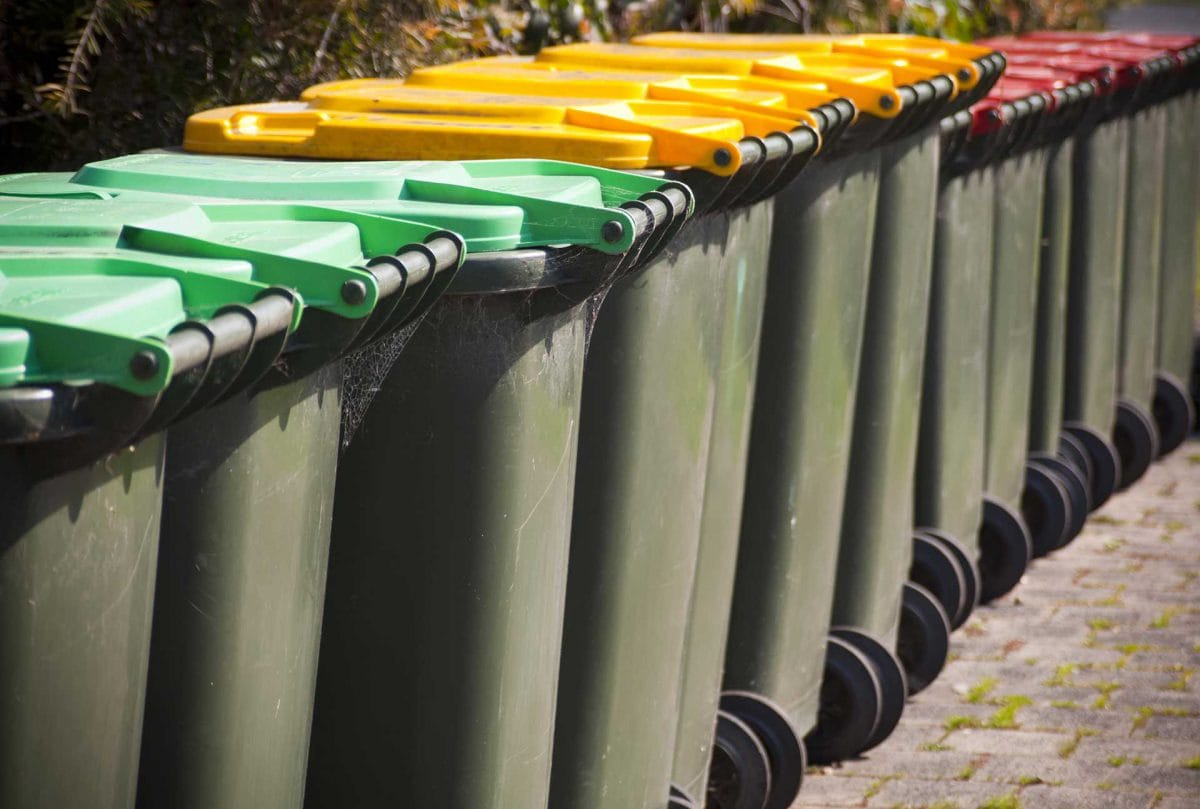
Three types of wheelie bins are available. First, you have the general waste bin. This is marked by a red lid. Some of the items that go into this bin include things like; food waste, foam and product packaging, plastic bags and food wrapping, glassware, crockery, and nappies. As a general rule, if you can’t recycle it, it should be placed into the general waste bin. These bins are collected weekly.

The next type of bin is the yellow bin. This is for recyclable items. Some common examples of things that can be included in this bin are; soft drink bottles, milk bottles, other plastic bottles and containers, tubs, glass bottles, glass jars, cardboard containers, aluminium or steel containers, cardboard items, and paper products. Anything with a grade of 1,2 or 3 will be able to be recycled. When placing these items into the bin, make sure that they are all put in loosely. Don’t package them into bags before placing them in, as this will make it harder for them to process at the plant. If you are unsure about whether or not something can be recycled, make sure to check your local council’s guidelines. These bins are collected fortnightly.

The third type of bin is for gardening waste and has a green lid. This can include things like lawn clippings, leaves, garden pruning’s, and small sticks. Like recycling, you’ll need to put them loosely into the bin, rather than placing them into a bag. You might need to request a green bin. These will be collected fortnightly.

Running Out Of Space

A common problem, particularly when recycling, is running out of space in your rubbish bin. Or you might have missed the collection date and have a backlog of rubbish. Your local City Council isn’t going to come out and collect your bin, unless it’s the actual bin day. You also can’t leave bags next to the bin – the garbos won’t collect it and you could actually face a fine for littering! So, you have three choices. You can either keep everything in your home or garage and then fill your bin up the following week, or you can find your nearest tip and dispose of any excess waste.

The final thing you can do is consider a rubbish removal company. For example, a rubbish removal Sydney team will come to your home, collect the rubbish and take it away. This can be a great option to explore if you accidentally miss the collection date.

Rubbish removal Sydney is a very efficient service, ensuring all households will be able to deal with their waste safely. If you have any further questions, check out our FAQs below, or get in touch.

What is a Wheelie Bin?

A wheelie bin is a name given to the bins that the council trucks will pick up. It’s called this because of the wheels which are placed under the base, making them easier to move. As mentioned, you will often have two bins. One with a red lid, and one with a yellow lid. However, in some council areas, you can apply for a garden waste bin. This will have a green lid. There are multiple different bin sizes available, depending on where you live. You can choose from a 240L, 120L, 80L, 70L, or 50L.

How Often is the Wheelie Bin Collected?

The exact collection times will vary, depending on your local council’s rules. However, your red bin, for general waste, is emptied once a week. Your yellow bin, for recycling items, will be emptied once every fortnight. If you have a green lidded bin, for garden waste, this will be emptied once a fortnight. To make sure that you don’t have any issues with the collection service, place the bins no more than a metre away from the curb. They should also be at least 30 centimetres apart. This will ensure that the council trucks can pick them up easily.

How do I Get a New Wheelie Bin?

In some cases, you might have damaged your wheelie bin or had it stolen. In this case, you need to make sure that you solve the issue as promptly as possible, otherwise, you will need to continue to take your rubbish to the tip. To apply for a new bin, you will need to get in touch with your local council. In the Sydney area, you will need to fill out the form to have the bin repaired or replaced. Generally, they will respond promptly to these requests. If you need a new wheelie bin, it will be delivered to your property.

What are Wheelie Bins Made From?

Many people would be surprised to learn that their wheelie bins are made polyethylene (PE) and contain recycled materials. Because of the harsh conditions that they need to endure, they have been extensively tested. For example, they need to make sure that the bin can withstand the pressures of being exposed to the sun, wind, and rain. They also need to make sure that they can handle being moved and bumped frequently.

What is the Return and Earn Program?

In combination with the rubbish removal program, the NSW government has implemented a Return and Earn program. This program allows households to collect aluminium cans and plastic bottles. You will then be able to return them to a Return and Earn collection point. When you do, each item will be turned into cash, 10 cents for every eligible item. This can be a great way to encourage people to collect more rubbish and increase the number of recyclable items that are gathered.

Where Does all my Rubbish go?

Finally, you might be curious about where your items go after the council has collected them. The rubbish will be taken to a landfill site. Recycling items will be taken to a sorting centre. There, they will be divided into different types. For example, separated into paper, plastic, and glass. Then, they will be further processed and recycled. Garden waste will be taken and turned into mulch. To make sure that this process functions smoothly, you’ll need to make sure that you put the right items into the right bins.

Don’t have room in your wheelie bin?

No worries! The team at Cheapest Load of Rubbish are available to help with residential, commercial and construction waste. If your wheelie bin has run out of room then give us a call! We will be able to free up space so your bin is empty and ready to fill up again in time for your council collection.

Categories
Articles

Council Rubbish Pick-up – Do’s and Don’ts

Please note: Cheapest Load of Rubbish does NOT provide services related to Council pick-ups or pre-booked Council clean-ups. While we provide comprehensive information about Council rubbish removal, Cheapest Load of Rubbish is a private company offering alternative solutions for your rubbish removal needs. For specific details and regulations regarding your Council’s pick-up schedules, bin guidelines, and clean-up programs, please refer directly to your local Council’s website or contact them for assistance.

In Sydney, rubbish removal is a responsibility for every household and their local Council. Since each Council region has its own unique demography, the local Councils’ rules for rubbish collection are also different. To dispose of rubbish properly we need to learn the Do’s and Don’ts.

In this blog, we will explain the general rules and services for rubbish removal in Sydney that will answer many of your questions. To check specific conditions, find and contact your local Council.

Do’s

  • Check bin collection days and place bins out the night before.
  • Place all waste in your bins and close the lid, making sure not to overfill.
  • Learn how to sort your rubbish and put in appropriate bins.
  • Retrieve and store your bins on your property within 24 hours after collection.
  • Check guidelines to ensure you only put Council accepted rubbish in your bins.

Don’t

  • Don’t place bags or boxes next to the bin, they won’t be collected.
  • Don’t overfill your bin, this makes the bin harder to pick up.
  • Don’t pack bins too tightly, collection vehicles can’t pick up heavy bins.
  • Don’t put bins out earlier than the night before collection.
  • Don’t put your bins in a spot that can block pedestrian, bicycle or vehicle access.
  • Don’t leave your bin out on the footpath or street after collection.
  • Don’t put rubbish in the wrong bin.

What clean-up services are provided by the Council?

Each local Council in Sydney will have its own information website to showcase all services regarding rubbish and recycling. In general, the two services that are provided by the local Council is:

  • Residential rubbish removal (wheelie bins).
  • Pre-booked Council Clean-up.

What are residential bins?

These are the red, yellow and green bins that you can see garbage trucks collecting once or twice a week. Red is for general waste, yellow is for recycling and green is for garden waste.

When you move to a new place, make sure you find these different coloured bins and learn what should go into each. On your Council’s website, there are detailed lists, bin stickers, posters and videos that explain exactly what you should and should not put into each bin.

How do I request new bins for my property?

To add new bins or make changes, you can complete request forms on your Council’s website or call you local Council. If you live in an apartment, check with your building manager.

How much rubbish can I place out for collection?

You can only place rubbish inside your bin. Additional bags of rubbish left out on the kerb will not be collected. Additionally, they are considered to be illegally dumped rubbish and can attract hefty fines.

If your bin is not big enough, consider ways to Reduce, Reuse, Repurpose and Recycle before ordering a new or bigger bin.

Where should I put the bins for collection?

If you live in a house, put your bins near the kerb and in a spot where they won’t block people or the garbage truck collecting your rubbish. After the rubbish has been removed, take the bins back to your property as soon as possible.

If you live in an apartment, check with your building manager where the rubbish chute or rubbish room is.

When do trucks come to collect rubbish?

This may be a different day for different Council’s, but generally red and yellow bins are collected on a particular day, each week or fortnight. Depending on your Council’s rules, the green organic waste bins may be collected less frequently. However, make sure you check with your Council as all areas will be different.

When should I put the bins out?

The night before collection day is the best. If you put the bins out too early, passers-by may add to the pile and overfill your bin. If you put the bins out too late, you may miss the garbage trucks that can come as early as 5am in some areas.

Can I get a pick-up service to collect big items?

Yes, all Councils should offer a pick-up service (also known as a Council Clean Up) for bulky items that can’t go into a bin. Generally, this service is only provided twice a year. You will need to book the service online or by phone and follow specific instructions of your Council.

If you live in an apartment, ask your building manager to make a booking. If your building doesn’t have one, call your local Council to get help.

What will the Council take in the Council Clean Up?

In general, your Council should pick up:

  • Mattresses.
  • Furniture and bulky household items.
  • Whitegoods (eg. Refrigerators, Washing Machines).
  • Green waste (generally must be bundled together).
  • E-waste (eg. TVs, Computers, Printers).

Check your local Council’s information page for detailed lists of what can be collected.

What won’t the Council take in the Council Clean Up?

In general, your Council will not pick up:

  • Food and general waste.
  • Building, renovation or demolition material.
  • Household chemicals.
  • Heavy or extra-large items.
  • Car parts.
  • Commercial waste.

Be sure to check out your local Council’s collection list so that you don’t break any rules and find rubbish left behind. Leaving rejected Council Clean Up rubbish out the front of your property can still be considered as dumping and can attract fines.

How much waste can my Council pick up?

This depends on your local Council’s rules. Generally, most Council’s ask you to keep it within one box trailer load (2m x 1.2m x 1m).

Is it illegal to leave furniture on the kerb?

Yes. Putting rubbish on the kerb that can block pedestrians and bicycles is considered illegal dumping. Anything that is too big for the Council Clean Up or your weekly bin collection should be taken to the Tip or collected by a dedicated rubbish removal company.

How do I prepare for Council Clean Up?

  1. Book online at your local Council’s website and check terms and conditions, especially what they do not collect.
  2. Before the collection day, follow your Councils’ instructions on how to separate your items or place the items. For example, you may be asked to put mattresses next to other rubbish items and not on top or under.
  3. Check safety hazards. For example, tape fridge and oven doors shut to prevent sudden opening. Wrap and label sharp or dangerous items like mirror and glass.
  4. Check that rubbish items fit in the amount that can be collected. Otherwise, they may not be collected and left behind.
  5. Do not place items out until the night before to prevent others from adding their rubbish to your pile.
  6. Place your items for pick-up in the area specified in your booking or by the Council. Choose a spot that doesn’t block the footpath.
  7. Be at home for the collection day to ensure all rubbish is removed.

What are other ways to dispose of waste?

If something can still be used, donating it to charities or community groups will help reduce landfill and reuse behaviours. Australia is fighting a tough War on Waste, and needs your help to minimise waste! “Reduce, Reuse, Repurpose and Recycle” is a perfect place to start!

Of course, there will be times where you need rubbish to be urgently removed or want someone else to take care of the junk properly. This is when Cheapest Load of Rubbish can help! We are a fully insured operation that provides same day rubbish removal. Get a free onsite, no obligation quote today and rest easy knowing your rubbish will be disposed of responsibly.

Disclaimer:

While this article provides comprehensive information about Sydney’s Council rubbish removal services, it is for informational purposes only.

We, Cheapest Load of Rubbish, are a private rubbish removal company that offers residential, commercial, and construction rubbish removal.

This information is intended to help residents understand their responsibilities and the limitations of Council services. For specific details and regulations regarding your Council’s pick-up schedules, bin guidelines, and clean-up programs, please refer directly to your local Council’s website or contact them for assistance.

If you require assistance removing bulky items that fall outside the scope of Council services, Cheapest Load of Rubbish is happy to help. We offer professional and responsible same-day rubbish removal services for various needs.

Please remember to dispose of all waste responsibly and follow your local Council regulations.

Thank you for reading!