One call and we take it all
Categories
Articles

Recycling Paper Products – What You Need To Know

Recycling paper has never been so fashionable and as our climate consciousness increases, we as a global society are starting to realise the impact of our own negligence in this regard in decades past. There has been a huge push by governments all around the world to introduce and enforce a recycling program in one form or another. 

Whether that’s implementing stricter littering fines and protected areas, or introducing different methods of rubbish removal that allow the homeowner to put recyclables in a specific coloured bag – our governments are on it. If you want to get on board, here’s what you need to know about recycling paper products.

Why Is Recycling Paper Products So Important? 

Recycling paper products reduces the number of paper products that end up in landfills and eventually in the ocean. These paper products pose a significant health risk to our ocean-faring fish and marine life. They are often found in the bellies of whales or in the throats of some poor fish who accidentally swallowed a wad of paper, thinking it was food and choking on it. 

Furthermore, recycling paper helps to cut down on the number of greenhouse gases that are emitted into the atmosphere when new trees are cut down and processed by paper mills – by as much as 70%. This means that recycling paper cuts down on pollution. Other benefits include a sense of altruism and you can make new paper material from old paper material up to seven times. After that, their fibres become too weak to be usable for anything. It is still preferred that everyone go as paper-less as possible.

Different Paper Products And How To Recycle Them 

It goes without saying that paper makes its way into our lives in innumerable ways, but there are lots of different ways to recycle different types of paper products. 

Office paper: Almost every type that you can think of is recyclable. Simply put them in with your recycled rubbish, if there’s not much. If you have plenty, then take it to one of rubbish removal Sydney’s recycling centres for proper processing. 

Coffee cups: Almost every coffee shop now uses paper coffee cups that can be recycled, again, place them in the corresponding recycling bin to allow for them to be properly recycled. Though, it is preferred that in order to cut down further on paper waste, that customers purchase their own reusable coffee mugs and bring those when out for their morning coffee. 

Shredded paper: One of the most common things that people struggle with is how to dispose of shredded paper. You wouldn’t think that much could come from shredded paper, but you’d be wrong. Shredded paper is often used to make handmade paper products. However, you’d be best to check with rubbish removal services to find out where you can take your shredded paper. Some recycling centres won’t accept shredded paper due to its fibrous nature, which can ruin their machines. 

Wet Paper: For the recycling process to be successful, it is critically important that the paper be dry. So, if you don’t have the time or patience to dry out your paper before you recycle it, then perhaps seek out alternative paper sources. For example, bamboo toilet paper is biodegradable, which means that instead of your traditional toilet paper languishing in the sewers, bamboo toilet paper will biodegrade and go back into the earth. A general rule of thumb for recycling paper is that it must be dry. 

Whether you’re new to recycling paper products, or are seeking to learn more about what types of paper products you have that could be recycled, the team at the Cheapest Load of Rubbish is here to help you with rubbish removal in Sydney. Reach out to us and we’ll conduct an assessment of what paper products you have that you perhaps aren’t recycling, that you could, or how best we can help you sort through and recycle as much as possible for the good of the planet and everyone and everything in and on it.

Categories
Articles

How To Get Rid of Unwanted Exercise Equipment

Working out at home is an excellent way of keeping fit and staying healthy, but most exercise equipment is pretty big. Which is okay if you’re still exercising frequently, but not so much when you haven’t been keeping up with your fitness routine.

Maybe you still want to run, but it’s your broken treadmill that doesn’t. Or maybe you’ve just lost interest and your home gym has become a massive clothes hanger. No matter what reason you’re not using your old exercise equipment, they’re so massive that they’re always in the way. And it doesn’t really make sense to leave your old, broken, or unwanted exercise equipment just sitting there and cluttering up your lounge or garage. If you’re finally ready to get rid of your old workout equipment, here’s how to do it.

Dispose Of Unwanted Exercise Equipment Yourself

Gym equipment is often both awkwardly shaped and incredibly heavy, which means they’re difficult to move around so you can take back all that space. In fact, trying to move massive exercise equipment is much harder work than actually using it for working out.

Then there’s the issue of how to dispose of your gym equipment if you do manage to get it all outside. Even if you successfully dragged it out to the curb for the next council collection, they often won’t pick it up.

If you or a very close mate has a big enough vehicle like a decent sized ute, then maybe you could take it to landfill. But it certainly won’t all fit into a little hatchback. And you can’t just leave it out there on the street. It all just seems like too much hard work.

So how can you dispose of old gym equipment if you can’t do it yourself? Well, before you decide to move out and leave it there, or build a wall around it just so you no longer have to look at it, some better options are a little less dramatic. Like Rubbish Removal Sydney for example, or maybe donating it!

Donate Unwanted Gym Equipment

If your equipment still works and is in pretty good condition, you may be able to donate it to a charity or community organisation. This is an excellent way to not only keep it from ending up in landfill prematurely but also to help people in need.

So have a look online or ring around your local St Vinnies, the Salvos, Goodwill, and any other reputable charities to see if they’re interested in any used gym equipment. If they’re not interested, you can also try your local community centres like PCYC, YMCA, senior homes, high schools, retirement centres, scouts, and hospitals.

However, you’ll most likely have to transport it there yourself and schedule a time to drop it off. Don’t forget that they’ll plug it in or try it out to make sure it works when you get there, so hopefully, nothing happens to it when transporting it there. If you get there and it doesn’t work, you’re back to square one and you’ll have to dispose of it yourself.

Recycle Unwanted Exercise Equipment

As most exercise machines and equipment contain materials which aren’t naturally biodegradable, they’re classified as environmental pollutants. And when these non-biodegradable materials inside home gym equipment end up in landfill, they’ll pollute the planet for many centuries.

So consider the environment when getting rid of your old exercise equipment by going green and recycling it all!  Recycling means valuable materials can be salvaged from your exercise equipment and then reused to produce something new. Plus, recycling also creates local jobs and even boosts our economy. Everybody wins!

If you decide to go this route, you’ll need to call your local recycling centre and ask them how you can recycle your old workout machines. Most recycling centres will only take certain pieces and will want them completely deconstructed. And don’t forget you’ll probably still need you to take your old equipment to them.

Junk Unwanted Exercise Equipment

The good news is that you can avoid all of the stress, worry, and work to dispose of your old or broken exercise equipment by contacting a junk removal service like Cheapest Load of Rubbish. This is by far the easiest option to get rid of old exercise equipment. Rubbish removal companies come out to you, remove your gym gear from wherever it is inside your home, and then take it away and out of your life forever!

This means you won’t need to do any work at all, as Rubbish Removal Sydney will do all of the heavy lifting, difficult maneuvering, and tricky transportation for you. Plus, a professional rubbish removal company like Cheapest Load Of Rubbish can remove old exercise equipment from your home without causing any damage to the walls, floors, and doors.

And if you’re concerned about the environment, you’ll be happy to know that Cheapest Load Of Rubbish are too. After we haul your old gym equipment away, we will re-house it or take it to a recycling facility to stop it from going to landfill. So contact the junk experts from Cheapest Load of Rubbish today and we’ll take care of your old exercise equipment for you.

Categories
Articles

What To Do With Old Cardboard

We all went a little crazy with our online shopping during the pandemic. Which not only explains why Jeff Bezos increased his net worth by around $75 billion, but also why our homes are full of cardboard boxes from home delivery services.

And it’s not just Amazon. Cardboard is everywhere. It’s on our breakfast tables, inside moving vans, all over our offices, and it even holds our pizza. Approximately 80% of all products we buy come packaged in cardboard. The reason we tend to use cardboard so much for everything is that it’s light, sturdy, malleable, relatively inexpensive, and extremely versatile.

Cardboard represents such a large portion of our waste stream, but it’s also one of the most commonly recycled materials after being picked up at rubbish removal. While cardboard is originally produced from tree fibres and recycled paper, it is also easily broken down at recycling stations and reused as cardboard many times over. So cardboard remains a highly recyclable and environmentally friendly product.

Types Of Cardboard Rubbish

There are different categories of cardboard, and the two most common ones are corrugated cardboard and paperboard. Not only does each type have different purposes, but they’re also manufactured using slightly different materials. This means the treatment and recycling process of each type is also different.

Corrugated Cardboard

This type of thick cardboard is the most commonly used material in brown cardboard boxes. Two smooth outer sheets of thin cardboard sandwiched in between an extra wavy layer of fluted corrugation.

While typically made of this three-ply construction, corrugated cardboard can also be manufactured with multiple layers of corrugated and flat cardboard. These extra layers of material used in corrugated cardboard make them thick, strong, and durable, which is why they are so often used as packing boxes for transporting goods.

Corrugated cardboard gets slightly thinner each time is recycled because the fibres which hold it together are shortened. When these fibres eventually become too short to manufacture corrugated cardboard, the material is then used to create a thinner type of cardboard named paperboard.

Paperboard Cardboard

Also called fibreboard or chipboard, paperboard is a single layer of usually greyish coloured material which is made using recycled cardboard. This single-ply paperboard looks similar to regular paper only a little bit thicker and more sturdy. That being said, paperboard doesn’t have the same strength as corrugated cardboard, so it can be more easily torn, bent, and folded.

As paperboard is especially thin and foldable, it is commonly used for product packaging and a wide variety of other consumer goods. Paperboard is used in its thick form as notepad covers, whereas its thinner form is used for cereal or shoe boxes. You can also find it used to make tubes for paper towels, wrapping paper, and toilet paper rolls.

What To Do With Old Cardboard

Despite cardboard being almost completely recyclable, it unfortunately still makes up approximately 10 per cent of all rubbish removal that typically ends up in landfill. But the good news is that cardboard is so versatile that it doesn’t automatically lose its usefulness once packages have arrived or cereal has been eaten.

Instead of simply recycling this material, you can help reduce the environmental impact of this waste and save some trees by repurposing your old cardboard into something new. Here are some of the most creative, practical, and sustainable ways you can reuse your cardboard in and around your home.

Storage

Easily the most obvious ways you can reuse your cardboard is for storage. If the cardboard boxes are still in good condition or can be refurbished, they can be used for moving, storage, or sending packages in the mail. Or decorate small cardboard boxes for reuse as all-purpose containers. You can also wrap Christmas lights around larger cardboard wrapping tubes for tangle-free storage. This works for pretty much anything else that gets easily tangled, like electrical cords and headphone cables.

Gardening

Cardboard has long been used by home horticulturists as a garden kneeler. By laying the cardboard flat in front of the garden bed, gardeners can kneel on it for all those gruelling hours of seed-planting and weed-pulling. Cardboard boxes can also be used as seedling trays, easily holding 10 to 20 seedlings in each container before planting them in your garden.

Arts & Crafts

Most people who are into their arts and crafts will most likely already know this, but there are endless ways to use cardboard to create works of art. They can also be used to store your supplies with little effort. In fact, there are so many ways cardboard can be reused creatively, there’s plenty of social media accounts which are dedicated to recycling cardboard for arts and crafts.

Weed Control

Old cardboard can easily be used to help control the weeds in your garden. Known as sheet mulching, the cardboard is soaked in water, laid flat in a weedy area, and covered with a few inches of soil. Not only does the wet cardboard prevent weeds from growing by blocking sunlight and smothering them, but this form of mulching also helps conserve water by trapping moisture. And as the weeds and the cardboard both break down, they also feed the soil in the process.

Playhouse

Everyone knows how much kids love using their imagination and playing with cardboard boxes for hours. So help them take their playtime to the next level by creating a cardboard fort or playhouse with them. All it takes is a simple cardboard box to be magically transformed into a playhouse kitchen, pop-up grocery store, or family car for a drive-in movie. Or use several boxes of various sizes to design the perfect castle for your young ones to defend with honour.

How To Recycle Cardboard

While most types of paperboard and corrugated cardboard should be recyclable in theory, from boxes and tubes to plates and notepads, not all of it can be. So to make sure your cardboard is suitable for the recycling process after rubbish removal Sydney, it’s important to understand the limitations so you know how to prepare it. 

Any used cardboard which has oil stains or food remnants like pizza boxes shouldn’t be automatically thrown out for rubbish removal Sydney. Nor should any cardboard which has been soaked with household cleaning products and supplies or is otherwise similarly wet or damp. This is because these chemical substances can make separating paper fibres too difficult, which compromises the cardboard and contaminates the recycling process.

How Cheapest Load Of Rubbish Can Help

Ultimately, reusing cardboard is so easy, you should always think twice before simply throwing them away. And no matter which way you choose to repurpose or reuse your old cardboard, you’ll be helping our environment.

At Cheapest Load Of Rubbish, we always highly recommend people make every possible effort to repurpose their old cardboard material before calling for rubbish removal Sydney. But when your old cardboard needs rubbish removal Sydney and send them off for recycling, we’re the team to call. That’s because Cheapest Load of Rubbish cares about the planet just as much as you, which is why we always do our best to make sure your cardboard never ends up in landfill.

Categories
Articles

6 Easy Ways To Reduce Your Families Waste

Everyone is talking about global warming, pollution, “going green” – but what are you actually doing to play a part? As a family, you can do plenty of things to make a difference, and it begins with small steps in the home. Here we delve deeper into what you can do at home to contribute to the environment in a positive way.

Why You Need To Reduce Your Waste

According to the Australian Bureau of Statistics, the average Aussie creates just over 2,000 kilos of waste every year. We spend over $1,200 on buying products we never use, and we waste around $600 worth of food. In the next 20 years, that number is expected to increase – and humans in general will consume more than we have ever done so in the history of mankind. The biggest wasters? Families with small children.

This is why it’s imperative that we each play a part and if you want a brighter future for those children, and future generations, reducing waste is the best place to start.

One of the major reasons we need to reduce waste is that it also decreases the amount of landfill, which takes up valuable space and is a major source of air and water pollution. Also, by reducing waste, you’re conserving resources such as trees, aluminium and petroleum – all of which are used for making plastic (if you stop using single-use plastics, you’ll play a part in reducing these).

It’s essential to keep in mind that everything you buy, wear and eat uses energy for manufacturing and processing. By reducing the purchase of unnecessary products and food, you’re limiting the amount of new resources and the energy required to create these.

It’s not just about the environment either. By reducing your waste at home, you’ll find that your finances have a positive impact – by spending time focusing on what you’re buying, you’ll be wasting less food, and by reusing items, you’ll save money on purchases. And probably the most important reason is that it ensures a future for children. It helps the planet to survive, and by recycling and paying attention to the amount of waste you have in the home, your children are also learning how to be more responsible. Teaching these younger generations how to take care of the environment means we’re protecting their future – and that of their children and grandchildren.

So, what can you do?

6 Ways To Reduce Waste At Home

Reducing waste at home doesn’t have to be complicated. Here are some of the ways you can get started.

Buy Secondhand & Donate

Manufacturing companies account for a large percentage of air pollution, and although Australia has done a lot to combat emissions from these factories, you can take it a step further. By purchasing your furniture, appliances, vehicles, and so on, secondhand, it’s one less product that needs to be manufactured. Although a small step, it’s still a step forward. Also, any time you do a spring clean, rather than binning all the things you no longer want, consider donating them if they are in good enough condition.

Ditch The Paper, Or Recycle It

If you subscribe to magazines or newspapers, swap the subscriptions over for digital editions instead. It’s much easier to read on the go, and you’ll help save some trees at the same time. The same goes for receipts at the supermarket (just say no when asked), and also for bank statements and other mail – make sure your accounts are all registered for digital, not hard copy. You should also put a No Junk Mail sticker on your letterbox so you don’t end up with hundreds of catalogues you’ll never read.

Breathe New Life Into Clothing

If you buy secondhand clothing, and then donate yours when you’re done, that’s great. But before you consider giving it away, think about how you might be able to repurpose it. If your jeans have holes in them – learn how to sew and fix them up. Buttons falling off your shirts – put them back on. Colour faded from your shorts – get some enviro-friendly dye and make them bright again.

Don’t Buy Disposables

We’re all guilty of it – family and friends are coming over for a big barbecue or birthday and, dreading the washing up that is guaranteed to follow, we invest in plastic plates and cutlery instead. Don’t do it. These light plastics end up in landfill, which is then washed away and lands in our oceans, making up around 80% of all marine debris. Every year, plastic kills more than 100,000 marine mammals and more than one million sea birds. If you really do want disposables, opt for recyclable bamboo instead.

Waste Not, Want Not

Didn’t eat all your dinner or cooked too much food for the family? Don’t throw it away! Freeze it for another day, use your leftover veggies to make “bubble and squeak” for lunch the next day, and put any fruit that’s no longer edible out for the native birds. If you have a compost (see next point), put your scraps into there instead. And you can reduce the amount of scraps you have in general by using the whole product – so rather than peeling your carrots and potatoes, cook and eat the skins as well (it’s actually the best part for your health!).

Start A Compost

All good compost requires three things: browns – your dead leaves and branches; greens – your vegetable waste and fruit scraps; and water. When it comes to the greens, start in the kitchen. You can add fruit and vegetables, eggshells, coffee grounds, nutshells, tea bags; for the browns, add your leaves and sawdust, hair and fur from your pets, and you can even add shredded newspaper and cardboard. Composting reduces the need for you to use chemicals in your garden, encourages the production of beneficial fungi and bacteria, enriches the soil, and reduces the methane emissions from landfill.

And when you go out:

  • Take a water bottle with you, so you don’t have to buy any
  • Take your own coffee cup that you can hand over at cafes
  • Remember your reusable grocery bags
  • Purchase products that have less packaging or that have recyclable packaging
  • Shop at the local farmers markets, also supporting local business
  • Buy fruit and vegetables that aren’t perfect – too much food is wasted because supermarkets generally only stock “perfect” products
  • Buy food in bulk, as it saves on packaging and money

Importance Of Recycling At Home

Not only is reducing your waste important, but ensuring you take care of the waste you do have is also essential. To do that, you need to recycle. You can recycle paper, plastics, glass and cardboard easily using your yellow recycle bin. You can also recycle metals, batteries, electronics, and some furniture. If you need help or advice, Cheapest Load of Rubbish are your rubbish removal Sydney experts. Simply get in touch with our team today to discuss your requirements or to arrange a quote.

Categories
Articles

Items Your Local Return & Earn Won’t Take

In 2017, the Return & Earn scheme was introduced in New South Wales to help reduce the amount of rubbish throughout the state. Beaches, parks and streets have been littered with cans, bottles and cartons for many years – and the clean up has cost the government millions of dollars. The scheme rewards people who do the right thing, paying 10c per piece.

Within the first six months alone, more than 350 million drink containers were refunded at various collection points. In three years, more than 4 billion containers had been collected and returned, equating to over $400 million in refunds allocated. The scheme encourages adults and children alike to keep litter off the streets, while earning extra cash. Schools and charities are also getting involved.

Once returned, drink containers are 100% recycled – protecting the environment and the waterways. To ensure every aspect of the scheme runs smooth, the Environmental Protection Agency is responsible for it – managing the registration of eligible containers and ensuring the returns process runs efficiently.

Other states in Australia have similar schemes – for example, in Queensland it’s called Containers for Change, and in Victoria it’s the Container Deposit Scheme. They all operate on the same premise though – to get rubbish off the streets.

Return & Earn Process

The Return & Earn scheme allows for environmental management that not only rewards consumers who recycle, but also provides council with the opportunity to reduce the cost of litter management. It has improved sustainability and provides an affordable and reliable method of recycling. It’s easy enough to become involved:

Step One: You want to start collecting your cans, bottles and containers (see below for further information on what’s eligible).

Step Two: Take them to a return point.

Step Three: Earn a refund or donate.

There are currently more than 600 points across New South Wales where you can take your cans and bottles, depending on how many you have. And there are a few different ways you can drop off your items to the Return & Earn scheme. Here’s a bit more information:

Reverse Vending Machine: insert your empty containers into the chute at the front of the machine, select your preferred payment method. These machines take up to 500 eligible containers in one transaction. You can receive your payment via retail refund – a printed voucher that you can use at a participating retailer; digital refund that links to PayPal, e-Voucher refund for participating retailers, or you can choose to donate your refund to a charity.

Over The Counter: There are collection points located throughout your local area, where you can take up to 100 containers. There will be an operator there who will ensure your cans and bottles are in good condition, and they will give you a refund of 10c per container in cash.

Automated Depot: This is for people who have more than 500 containers. Take your items for mechanical scanning and counting. Refunds are processed as retail vouchers.

What Can Be Returned?

Most beverage containers between 150ml and 3 litres are eligible for the Return & Earn system if they are made from PET, HDPE, glass, aluminium, steel or liquid paperboard. It accepts the following, provided they are in good condition (not crushed or broken), are empty, and still have the label attached:

  1. Cans – soft drink, energy drinks
  2. Bottles – plastic and glass
  3. Cartons – milk
  4. Juice poppers

There’s one simple way to tell if your recyclables will be accepted – simply look for the 10c label on the container. If there is a 10c refund mark, you can return the container.

What Can’t Be Returned?

The following items are not accepted by the Return & Earn system; however you can still put these into your household recycling:

  1. Milk containers
  2. Glass wine bottles
  3. Glass spirit bottles
  4. Wine sachets of more than 250ml
  5. Juice bottles
  6. Cordial bottles
  7. Health tonics

If you’re not sure, check the container database online.

What Can You Do With Items You Can’t Return & Earn?

If you can’t return and earn your items, you can still recycle them, with the following three options:

Yellow Bin: All homes have a yellow bin for your recyclables. The bin is picked up, curbside, every fortnight from outside your home by local council, and allows you to dispose of all those old bottles you can’t return and earn, including milk and wine bottles. Just remember your items need to be loose in the bin, with no plastic bags or other non-recyclable items. The wrong items in the bin can contaminate the entire load.

Kerbside Council Cleanups: Many cities, including Sydney, offer kerbside cleanups where you place any items you want to get rid of on the footpath outside your home, the night before collection. Council collects a range of items in this – including furniture and white goods. Although it is preferred you don’t put your old wine bottles out for this, you can use this service for your general household rubbish removal.

Recycle Centre: If you have a large amount of glass bottles, milk containers and so on that won’t fit in your yellow bin, you can always pack them into the car and take them to your local recycle centre. Check online and give them a call first to see if they are accepting the items you have.

Rubbish Removal: Don’t have any way to get it to the local recycle centre yourself? Or do you have other items you need gone from your property as well? Hire a rubbish removal service like Cheapest Load of Rubbish to come and take all your trash away for you. They can remove any amount of trash and they’ll take it to your local recycle centre or landfill tip – whatever is suitable.

If you want to know more, get in touch with Cheapest Load of Rubbish today. We provide full rubbish removal services, we’re fully insured, and we’ll take care of your recyclables to ensure they are going to the right place.

Categories
Articles

Recycling For Beginners – Where To Start

If you want to make a difference to the state of the environment, one of the easiest places to start is in the home. Recycling might seem like a timewaster, but it actually has positive effects on the planet, and your mindset. It not only reduces your personal carbon footprint and pollution in general, it can also make you feel happier knowing you’re playing a positive part in the future. If you’re new to recycling, here are the essentials you need to know to help get you off the ground: 

What is recycling and why is it important?

Recycling is the process where used materials are broken down and reused or remade into new products. By doing this, it limits the waste of materials that would be otherwise useful and decreases the amount of air and water pollution in the environment by reducing the need for extraction, refining and processing of raw materials. Recycling also reduces the amount of landfill, which is one of the main causes of greenhouse gas. By paying more attention to your trash, you could contribute to saving over 700 million tonne of CO2 every year. 

How To Start Recycling

There are plenty of steps you can take to recycle. Start with the 4 Rs: Reduce, Reuse, Repurpose and Recycle. Then make simple changes:

Skip the plastic bags. Supermarkets now provide reusable bags, rather than plastic, so be sure to load up on these and keep them somewhere handy. You might also consider keeping your fresh fruit and veggies loose when you do your groceries, rather than using the roll bags they provide. 

Don’t throw out scrap paper, but rather, use it for crafts with the kids. You can do the same sort of thing with old jars and containers. Don’t be afraid to get creative and have a little fun with what you have available. 

Avoid using paper napkins and towels and opt for cloth ones instead. These will reduce your paper consumption and they are easy enough to wash. You could also consider cloth nappies and reusable period undies rather than sanitary napkins. 

Other things you can do include starting a compost pile so you can recycle any food waste – and save money on fertilizer for the garden at the same time! You can also upcycle or donate old furniture, clothing and other household items; and get to know your local Container Deposit Scheme (Return and Earn in NSW), set up as an incentive that gives you a cash refund on any containers you return. 

Finally, set up a recycle bin next to your regular rubbish bin. Indoors, this is as simple as buying yourself two bins, one for recyclables and one for general trash. Outdoors, it’s even easier. Every home in Australia should have a bin with a yellow lid – if you don’t, get in touch with your local City Council and order one. They’re free. Your yellow bin is for recyclables only, and it’s picked up by your local garbos every two weeks. However, recycling effectively isn’t as simple as throwing all your bottles and paper into that bin and waiting for collection.

What Can Be Recycled?

In general, there are five materials that can be recycled. Cans made from aluminium and steel; glass bottles and jars; paper products, including cardboard, printed paper, magazines; food and beverage cartons, such as milk cartons and soup cartons; and plastics that have the number 1 or 2 in the recycle symbol – including water bottles, some jugs and tubs, and so on. With an extensive list, it’s probably easier to talk about what you can’t recycle instead… 

What Can’t Be Recycled?

While most every day items can be recycled in some form or another, there are a number of items that end up as landfill. These include:

  • Oils
  • Medical waste
  • Polystyrene
  • Garden waste
  • Disposable nappies
  • Plastic bags
  • Recyclables that you’ve thrown out IN plastic bags
  • Bubble wrap
  • Ovenware
  • Ceramics
  • Light bulbs
  • Plastic cups and plates
  • Straws
  • Window glass
  • Chip packets
  • Cutlery
  • Plastic toys

If you’re not sure, do a simple search online. 

Tip: You can generally recycle anything made from cardboard or paper, and some plastics. That doesn’t mean you can throw all these into your yellow bin, though, so check with your local council for details on what can and can’t be included. 

Anything that can’t be recycled can go in your regular rubbish bin, or can be taken to the local transfer station.

Recyclables You Might Not Know About

There are a range of other items you can recycle as well, though these are less commonly recognised, including:

  • Lead acid batteries
  • Mobile phones
  • Soft plastics
  • Garden waste
  • Organic waste
  • Scrap metal
  • Old clothing, blankets and sheets
  • Printer cartridges
  • Electronic items
  • Household chemicals
  • Chemical containers

To recycle these, you may need professional assistance as they must be handled correctly. 

Avoid Contamination 

While filling your yellow bin is great, if it’s not done properly, it’s no good. As such, it’s essential that you take note of items that may cause contamination. For example, although your pizza box is recyclable, if there is any leftover pizza in it – it spoils the process. If your paper bag from your KFC lunch has a lot of oil attached, it’s rubbish. Wine or water bottles with the lid still on them? Rubbish. But if you take the lid off, you can recycle them. 

There’s no need to rinse your containers before putting them in the bin, as long as they are empty and dry. And if you’re not sure on which plastics you can recycle, do the scrunch test. If you can scrunch the plastic into a ball – don’t put it in your yellow bin. Instead, you can take this to the REDcycle bin at your local supermarket. 

How Can Cheapest Load Of Rubbish Help?

The good news is that if you’re unsure where to take your rubbish, Cheapest Load of Rubbish is just a phone call away. Cheapest Load Of Rubbish are rubbish removal experts in Sydney region, providing everything from warehouse rubbish removal and residential rubbish removal, to demolition rubbish removal and office rubbish removal. We ensure your recyclables are taken to the local recycling centre or, if they are in good enough condition, we’ll take them straight to a local charity. If your items can’t be recycled, we’ll take them to the local transfer station. Best of all, we will clean up when we go – leaving only footprints!

Categories
Articles

The Basics of Return And Earn

Statistics have shown that NSW used to throw away approximately 160 million drink containers each year. The annual cost for local communities to clean up and manage all these containers was also pretty high at almost $200 million. In order to help create a pollution solution, the Return and Earn container deposit scheme was launched in December of 2017.

What Is The Return And Earn Scheme?

Created by the NSW Government, the Return and Earn initiative is the state’s largest ever litter reduction program which encourages people to collect and return recyclable items. Individuals, households, schools, and charitable organisations are all able to take aluminium and plastic containers to any Return and Earn collection location where they will earn 10 cents for each eligible piece.

In the first 2 years alone, the Return and Earn scheme has had over 3 billion containers collected and returned to reverse vending machines, automated depots, and over the counter locations, all for 10 cents a pop. It doesn’t matter if who originally paid for the container, or if it was litter that was picked up from the side of the road. And the more eligible containers returned to the more cold hard cash you can make.

The scheme has already had a massively positive and powerful impact on the environment by reducing the total amount of littered empty containers in our communities. The money it has injected into our state economy has also been huge as refunds add up very quickly, eventually stretching a long way beyond just a 10 cent value.

Where Can You Return And Earn?

There are plenty of Return And Earn collection points in both regional and metropolitan priority collection areas of New South Wales. There are many different types of Return And Earn collection locations throughout the state, which include reverse vending machines, recycling centres, and automated depot sites, as well as over the counter locations like at local shops and inside shopping centres.

The state has been divided into 7 separate zones in total, and TOMRA Cleanaway is required to meet the collection target of each zone. As there are always new collection points being added across New South Wales, there is now an interactive map available online to locate your nearest collection point.

What Items Does Return And Earn Take?

While most beverage containers which are meant to be consumed while on the go and commonly found as litter are eligible for a refund at Return And Earn, there are some cans, bottles, and cartons that they do not accept. Containers made from PET, HDPE, glass, aluminium, steel, or liquid paperboard materials like soft drink cans, beer bottles, juice cartons or poppers are all eligible for a 10-cent refund.

As long as they have a volume of between 150ml and 3 Litres, and are empty, unbroken, uncrushed, and have the original label still attached when they are returned. If you are unsure, just look for the 10c return label to see if the container is definitely eligible for a refund.

What Items Don’t Return And Earn Take?

Items that are most often used at home will not generally be refundable at a Return And Earn collection point. These can include glass wine bottles, cordial containers, glass spirit bottles, large juice containers or bottles, large plastic cask bladders for boxed wine or water, and large containers for plain milk, flavoured milk, or milk substitutes. While these containers may not be eligible for a refund, please remember to dispose of them in a household recycling bin.

What Can You Do With Items Return And Earn Doesn’t Take?

While the New South Wales government’s Return And Earn collection initiative is an amazing scheme, they do not accept all containers. If you have anything that is not eligible for a refund at Return And Earn collection points, it is important to do the right thing by ensuring all of your rubbish and recycling is sorted correctly and discarded in the correct way.

Take all of your rubbish to bins, recycling depots, or council pick up. If anything you need discarded can still be used for something, it’s a good idea to help reduce landfill by donating it to your local charity or community group for reuse wherever possible. But what can you do if you have a large amount of rubbish every week that doesn’t fit in the local council bins? Or maybe you just have some junk at your home that you need removed urgently?

Well, that’s when the Cheapest Load of Rubbish team can help you! We provide comprehensive junk collection, general waste management, and waste removal services throughout Sydney. You can always rely on our exceptional rubbish disposal solutions whenever you need us and wherever you are.

Our fully insured waste operation provides free no obligation onsite quotes and same day rubbish removal, so you can always relax knowing that your rubbish will be collected and disposed of safely and responsibly. Just remember that even if your containers aren’t eligible for a refund at Return and Earn, it should still be recycled if allowed via your curb side collection of household recycling. 

Why You Shouldn’t Dump Any Rubbish?

Illegal dumping not only has a terribly damaging effect on us humans, but also the local wildlife and sea creatures. That’s because pollution from any dumped waste can very easily end up in streams and rivers before it eventually makes its way out into the ocean.

Whenever rubbish is dumped illegally in your local community, not only does it look terrible, but it also has a huge impact on the area as a whole. To combat illegal dumping in order to keep our community clean, pristine, and safe, the NSW government have put heavy penalties in place while also investing millions of dollars in cleaning up all of the litter, rubbish, and other mess.

Return and Earn has already fundamentally changed our behaviour and attitudes towards littering, recycling, and controlling our waste. This is very helpful as it will help us to ensure the beautiful environment remains that way for our wildlife and for many future generations to come.

Categories
Articles

10 Easy Swaps to Create Less Waste

In a world where companies and clever advertisers do their best to control what we buy and use, it’s becoming more and more difficult to live sustainably.

In every day advertising and in supermarkets in general, we’re told to buy an abundance of single-use products and packages which eventually end up in landfill or in the ocean, which is undeniably unkind to the earth, and also to ourselves.

So, what exactly can we do to ensure that we follow more sustainable lifestyles, while still enjoying ourselves, and not sacrificing too much?

What is Sustainable Living?

Sustainable living is the act of reducing the amount of waste we create, and the amount of strain that we put on the climate, by swapping out unsustainable products and actions for sustainable ones. This means rubbish recycle and rubbish reuse, limiting use of fossil fuels, buying less harmful materials, and much more.

There’s a large misconception that in order to live sustainably, you have to give up all of the things you enjoy buying and using, and live a restricted life, completely dedicated to the environment. This, of course, is not true. Anyone can live more sustainably by simply swapping out a few non-eco-friendly things for eco-friendly ones. And what’s not to like? You can save the planet, live a simpler life, and feel great about it.

So what should you be swapping out in order to live a more sustainable lifestyle? Here are 10 easy swaps that anyone can do in order to create less waste.

1: Bottled Cosmetic Products – Solids and Refills

If you’re like most people, you probably buy shampoo, shower gel, conditioner and many similar products in hard plastic bottles from the supermarket. This type of plastic is especially harmful to the environment, and it’s also unlikely to get recycled. The solution? Find a zero-waste store (there are plenty around) that sells refills. All you need to do is bring your own used containers and fill them up.

Another great alternative to bottled cosmetics is solid shampoos, conditioners and soap bars. You can buy these in several stores, and most are also completely vegan and cruelty-free.

2: Plastic Water Bottles – Reusable Water Bottles

This sounds like a pretty obvious one, but many people still buy bottled water from shops instead of just using a reusable bottle or flask. This is almost completely unnecessary, as you’ll find that the water in your tap is completely drinkable and clean. It can be hard to get into the habit of taking your own water bottle out with you, but once you’ve got the hang of it, you’ll feel great.

3: Plastic Shopping Bags – Earth Friendly Shopping Bags

Since plastic shopping bags normally can’t be recycled, they make up a lot of the world’s plastic waste, even though they’re completely replaceable. This causes a bit of a dilemma, because unfortunately, people still need something to carry their shopping in. The good thing is, that in Australia we’ve already introduced measures at the stores where single-use shopping bags are no longer allowed. And there are actually large fines for retailers who still use them.

Many people believe the natural solution would be to buy reusable cotton tote bags that you see for sale in the supermarket. Actually, although they don’t contain any plastic, most cotton tote bags have a much greater carbon footprint than that of a plastic bag, due to the factories in which they are made, and the transport that it takes for them to be moved from poorer countries, and onto our supermarket shelves.  A study from the UK Environment Agency even suggests that one cotton tote bag has the same footprint as about 131 plastic bags.

So what can you do? Re-use your shopping bags that you get at the supermarket. It’s that simple. Or you can always get your imagination working and make your own shopping bags out of old clothes that you don’t use anymore.

4: Tampons and Pads – Reusable Cloths and Menstrual Cups

Since tampons and pads are only single-use sanitary items, they have a rather large carbon footprint, and often can’t be biodegraded. Aside from this, they can also be pretty expensive, and those prices really add up.

A great alternative to single-use sanitary products is reusable cloths. They can be washed and reused, and you’ll never have to buy pads and tampons again. You may also want to try menstrual cups, which are a keen favourite of many women living sustainably.

5: Plastic Toothbrushes – Bamboo Toothbrushes

Like other hard plastic products, toothbrushes are very bad for the environment, and can’t even be traditionally recycled. These can be easily swapped out for bamboo toothbrushes, which are not only durable, but they’re also completely biodegradable, meaning they’ll go back into the earth one day.

6: Packaged Food – Unpackaged Food

It can be quite tricky to buy unpackaged food in the supermarket, as almost everything seems to come in unnecessary plastic packaging. That being said, a lot of healthier foods come without plastic, and there’s almost always a plastic-free alternative to the food you’re buying. For example, you’ll often find bags of onions wrapped in plastic, exactly next to loose onions. If this is the case, always try to go for the unpackaged version.

7: Disposable Coffee Cups – Travel Mugs

If you’re a person that likes to always grab a coffee somewhere on your way to work, you could be causing unnecessary harm to the planet by buying too many single-use coffee cups. Try upgrading to a reusable travel mug, which you can take with you to the coffee shop, and ask for it to be filled up.

8: Doggy Bags – Bring your own Tupperware

Nobody likes to leave unfinished food in restaurants, and so bringing a doggy bag home with you seems like a reasonable solution. But of course, all that plastic creates more waste, which is the opposite of what you want. Bringing your own Tupperware to a restaurant with you means that you’ll never have to feel guilty about taking a doggy bag home.

9: Plastic Straws – Reusable or Paper Straws

Since seeing distressing images of sea creatures being injured and harmed by plastic straws, many people have switched to reusable alternatives. Some popular products are metal or glass straws, however you may also want to try single-use paper straws.

10: Plastic Cutlery – Reusable Cutlery

Instead of buying heaps of harmful plastic cutlery to eat with, try using the metal or wooden cutlery that you have at home. This seems like a pretty obvious one, but if you go for picnics or eat ready meals at work a lot, there’s a chance that you might resort to using plastic knives and forks. Try your best to remember to bring your own cutlery from home next time, and you’ll be well on your way to living sustainably.

Rubbish recycle and rubbish reuse is imperative if we want to take care of our planet. Do what you can to help and the future of the world will go a long way!

Let Cheapest Load of Rubbish Help

The team at Cheapest Load of Rubbish are strong believers in sustainable living and recycling. That’s why we take care to recycle wherever possible. Our team are dedicated to helping Sydneysiders live sustainably while removing all of your rubbish quickly and efficiently, taking the time to hand sort all of the rubbish we collect to dispose of your rubbish as responsibly as possible.

Categories
Articles

Plastic Fantastic: Do’s and Don’ts of Recycling Plastic

Protecting the environment should be a priority for everyone and one of the easiest ways to do this is by recycling plastic. This will allow plastic items to get taken to a facility where they can be broken down and turned into a new product, reducing the number of new plastics that need to be produced.

Why Recycle Plastics?

One of the biggest benefits in recycling is the ability to reduce the number of plastics that end up in the environment. These can do a lot of damage. We’ve all heard the heartbreaking stories of turtles that mistake a plastic bag for a jellyfish. Once swallowed these bags can block the airways of the turtle. However, there are other ways that plastics can damage the environment. For example, this waste will need to break down.

In landfill, it can take up to 1,000 years before it can decompose properly. In some cases, the plastic might not break down at all, simply fracturing into smaller and smaller pieces. In the ocean, these can collect in massive vortexes, known at the Great Pacific Garbage Patch. These giant islands don’t account for the bigger pieces of plastics which sink to the bottom of the ocean. One of the best ways to prevent these environmental impacts is by disposing of plastics more efficiently. 

About Plastics

There are several different types of plastic. For example, you have PET bottles, these often contain soft drinks. Another common type of plastic is HPDE. This is most commonly used for materials like milk and shampoo. You might also notice PP products, which are things like ice cream containers.

Trying to tell these plastic items apart can be very confusing. To make it easier, the government developed a system. Most plastic items will have a triangle on them, with a number in the middle. As a general rule, items that are marked with a 1,2 or 3 can be recycled. Whether or not the other numbers will be accepted depends on the local council regulations. You should be able to find this information on their website.

The Recycling System

For many people, the recycling system can be very confusing. Because of this, they might not be following the correct procedures when recycling their products. To make this simpler, here are a few of the dos and don’ts you should be following. First, you should think about the type of plastic that you are recycling in the yellow bin. Not all plastics can be recycled and make sure you don’t put junk in the bins. As a general rule, councils will be able to deal with harder plastics like soft drink bottles and ice cream containers. Some softer products, like plastic bags and product packaging, might not be accepted. But you should check the local regulations for pick-up.

Just because you can’t put something in the recycling wheelie bin, doesn’t mean it can’t be recycled. If not, there are a range of programs for you to explore. A common example is the REDcycle program, which lets you recycle plastic bags. You can find a REDcycle bin in most supermarkets.

Finally, the biggest thing you should avoid is throwing potentially recyclable items away or putting them into the general waste bin. This can have a lot of environmental consequences.

Many people are seeking to find a way to improve the environment. Something as simple as changing the way that you deal and clean-up plastic rubbish can have a big impact. Some of the common questions we come across include:

Can Plastics be Put in the Yellow Recycling Bin?

Let’s start by answering one of the most questions, what type of plastics can you put into the yellow recycling bin? As we mentioned, items marked with a 1,2, or 3 will be safe to put into the bin. This can include things like plastic bottles and containers. It can also include things like plastic plant pots. However, there are a few plastic items that the council won’t accept in their rubbish removal program. For example, many plastic councils won’t be able to recycle thinner plastic trays, like the ones that you find on meat products. Most people know that plastic bottles, like the ones from soft drinks or milk, can be recycled. But, before you add them to your wheelie bin rubbish, make sure to remove the lid, as these might explode in the plant. Any time you run into something that you aren’t sure about, make sure to check your councils’ guidelines.

What About The Plastics That Can’t Go In The Yellow Bin?

As a general rule, all types of plastics can be recycled. But some will be more difficult to recycle than others. For example, some plastics can be placed into the yellow recycling bin. Others might need to be taken to a more specialised location. For example, you might need to take bags into a REDcycle, often found in your local supermarket. Another common recycling program is TerraCycle, which you can use to recycle bathroom products like toothpaste tubes and floss containers. The best way to find these recycling opportunities is by researching online. You might also want to try contacting your local council and getting more information.

Can Plastic Cutlery be Recycled?

An item that can cause a lot of concern is the plastic cutlery. Often, these are disposable items that are designed to be used at parties and other events. As a general rule, you won’t be able to put these items into your yellow recycling bin. Because of their irregular shape, they might block the recycling plant and are hard to sort out. Because of this, you will need to place them into the general waste. For this reason, it’s recommended that you avoid this type of cutlery altogether. 

Can you Recycle Disposable Coffee Cups?

The materials used to create disposable coffee cups mean that you won’t be able to recycle them. Oddly, though, you might be able to recycle the lids, as long as they’re clean. You should check the rubbish removal Sydney guidelines for your local council. Some places might allow the lids in the curbside collection while others won’t. Generally, though, you should avoid the disposable cups. A more environmentally friendly response should be to get a re-usable Keep Cup.

Can Plastic Bags be Recycled?

Another item that can cause a lot of confusion is plastic bags, such as shopping bags and food packaging. In most cases, you won’t be able to put these into the yellow recycling bins. Because they are light, they can be difficult to remove at the plant. They also have the potential to get stuck in the machinery. To dispose of these, collect them up in a plastic bag and take them to REDcycle. These can be found in most supermarkets.

Is it Illegal to Dump Plastic Products?

Recycling is a great way to care for the planet. It’s illegal to dump plastic. These offenses can often carry some serious penalties. How severe the penalty is will depend on where you live and how much rubbish you dumped. For example, in New South Wales, individuals can be fined up to $1 million, or face 7 years in prison, if it’s determined that they were trying to willfully damage the environment. For less serious cases, you might face a $750 spot fine for littering.

Contact Cheapest Load of Rubbish

The team at Cheapest Load of Rubbish are well versed in plastic rubbish removal. Our team are available whenever you need us. Just give us a call and we will be able to provide you with a free quote, same day and last minute rubbish removals (available whenever possible).

Categories
Rubbish Removal Domestic Rubbish Removal Articles

Understanding Your Wheelie Bin – What Goes Where

One of the great things about living in Australia is our rubbish removal service. All you need to do is put the items into the right wheelie bin and the council will take care of the rest. Despite the simplicity of it, many people don’t follow (or don’t know) the rules of the bins themselves. So, we’re here to help.

Types of Bins

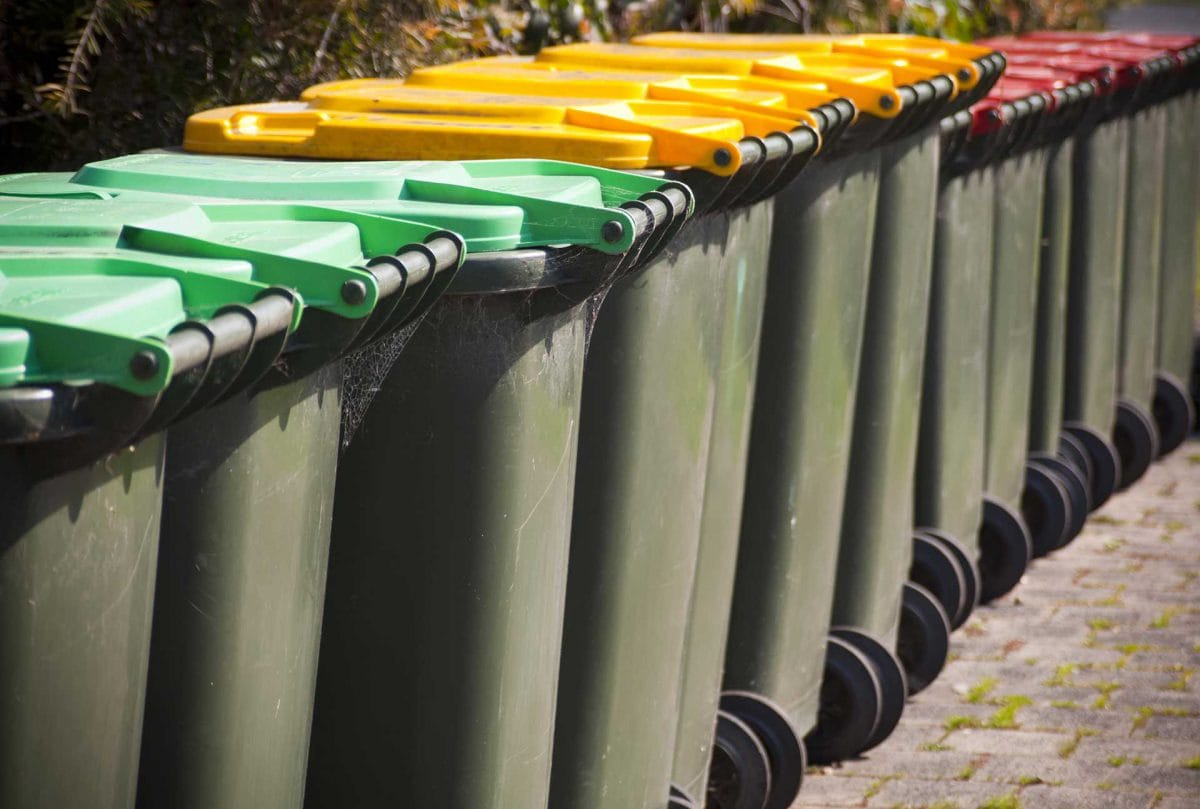
Three types of wheelie bins are available. First, you have the general waste bin. This is marked by a red lid. Some of the items that go into this bin include things like; food waste, foam and product packaging, plastic bags and food wrapping, glassware, crockery, and nappies. As a general rule, if you can’t recycle it, it should be placed into the general waste bin. These bins are collected weekly.

The next type of bin is the yellow bin. This is for recyclable items. Some common examples of things that can be included in this bin are; soft drink bottles, milk bottles, other plastic bottles and containers, tubs, glass bottles, glass jars, cardboard containers, aluminium or steel containers, cardboard items, and paper products. Anything with a grade of 1,2 or 3 will be able to be recycled. When placing these items into the bin, make sure that they are all put in loosely. Don’t package them into bags before placing them in, as this will make it harder for them to process at the plant. If you are unsure about whether or not something can be recycled, make sure to check your local council’s guidelines. These bins are collected fortnightly.

The third type of bin is for gardening waste and has a green lid. This can include things like lawn clippings, leaves, garden pruning’s, and small sticks. Like recycling, you’ll need to put them loosely into the bin, rather than placing them into a bag. You might need to request a green bin. These will be collected fortnightly.

Running Out Of Space

A common problem, particularly when recycling, is running out of space in your rubbish bin. Or you might have missed the collection date and have a backlog of rubbish. Your local City Council isn’t going to come out and collect your bin, unless it’s the actual bin day. You also can’t leave bags next to the bin – the garbos won’t collect it and you could actually face a fine for littering! So, you have three choices. You can either keep everything in your home or garage and then fill your bin up the following week, or you can find your nearest tip and dispose of any excess waste.

The final thing you can do is consider a rubbish removal company. For example, a rubbish removal Sydney team will come to your home, collect the rubbish and take it away. This can be a great option to explore if you accidentally miss the collection date.

Rubbish removal Sydney is a very efficient service, ensuring all households will be able to deal with their waste safely. If you have any further questions, check out our FAQs below, or get in touch.

What is a Wheelie Bin?

A wheelie bin is a name given to the bins that the council trucks will pick up. It’s called this because of the wheels which are placed under the base, making them easier to move. As mentioned, you will often have two bins. One with a red lid, and one with a yellow lid. However, in some council areas, you can apply for a garden waste bin. This will have a green lid. There are multiple different bin sizes available, depending on where you live. You can choose from a 240L, 120L, 80L, 70L, or 50L.

How Often is the Wheelie Bin Collected?

The exact collection times will vary, depending on your local council’s rules. However, your red bin, for general waste, is emptied once a week. Your yellow bin, for recycling items, will be emptied once every fortnight. If you have a green lidded bin, for garden waste, this will be emptied once a fortnight. To make sure that you don’t have any issues with the collection service, place the bins no more than a metre away from the curb. They should also be at least 30 centimetres apart. This will ensure that the council trucks can pick them up easily.

How do I Get a New Wheelie Bin?

In some cases, you might have damaged your wheelie bin or had it stolen. In this case, you need to make sure that you solve the issue as promptly as possible, otherwise, you will need to continue to take your rubbish to the tip. To apply for a new bin, you will need to get in touch with your local council. In the Sydney area, you will need to fill out the form to have the bin repaired or replaced. Generally, they will respond promptly to these requests. If you need a new wheelie bin, it will be delivered to your property.

What are Wheelie Bins Made From?

Many people would be surprised to learn that their wheelie bins are made polyethylene (PE) and contain recycled materials. Because of the harsh conditions that they need to endure, they have been extensively tested. For example, they need to make sure that the bin can withstand the pressures of being exposed to the sun, wind, and rain. They also need to make sure that they can handle being moved and bumped frequently.

What is the Return and Earn Program?

In combination with the rubbish removal program, the NSW government has implemented a Return and Earn program. This program allows households to collect aluminium cans and plastic bottles. You will then be able to return them to a Return and Earn collection point. When you do, each item will be turned into cash, 10 cents for every eligible item. This can be a great way to encourage people to collect more rubbish and increase the number of recyclable items that are gathered.

Where Does all my Rubbish go?

Finally, you might be curious about where your items go after the council has collected them. The rubbish will be taken to a landfill site. Recycling items will be taken to a sorting centre. There, they will be divided into different types. For example, separated into paper, plastic, and glass. Then, they will be further processed and recycled. Garden waste will be taken and turned into mulch. To make sure that this process functions smoothly, you’ll need to make sure that you put the right items into the right bins.

Don’t have room in your wheelie bin?

No worries! The team at Cheapest Load of Rubbish are available to help with residential, commercial and construction waste. If your wheelie bin has run out of room then give us a call! We will be able to free up space so your bin is empty and ready to fill up again in time for your council collection.