One call and we take it all
Categories
Rubbish Removal

DIY Rubbish Removal: When and How to Do It Yourself

**Please note, Cheapest Load of Rubbish can’t accept all hazardous waste. Please check with your local council first and then enquire with us to check what we can take. Please contact your local council for council clean-ups in your area.**

Are you itching to get rid of all your old rubbish, but you have no idea when and where to start? You should start right now, but you can’t just dive in, it takes organisation to get the job done well. Once you start the clear out, what do you do with all the rubbish? We walk you through the DIY rubbish removal process. 

When to Do It Yourself 

If you have the time and the willpower, doing it yourself is a great idea. Nobody knows your junk like you, so you’re in the best position to handle the clearout. Or, at least the sorting stage of the proceedings. 

There’s also an element of convenience to handling rubbish removal on your own, you’re completely in charge of the timeline and you can fit the clear-out into your schedule. However, rubbish removal companies are very flexible and many provide same-day services. So, if you pick up the phone to call for a quote, they can be with you in a matter of hours to clear everything away (where possible). 

Typically, the best time to do it yourself is when the job is smaller and more manageable. 

How to Do It Yourself 

The first step in this process is getting organised. Is there one room in particular you’re focused on, or is there a household’s worth of rubbish to ditch? A plan of attack will keep you on track and prevent you from getting overwhelmed by the size of the task. 

Create boxes or piles – what is for donation, recycling, landfill, or selling. It’s much easier to DIY rubbish removal if you’re organised from the outset. 

Before you get stuck in, be sure to wear protective gear. If you’re digging through a garage or a shed, you should wear thick gloves, a mask, and goggles. You never know what creatures, sharp items, or dusty mess you’ll come across. 

There may be awkward or heavy items you struggle to move or load. In these cases, you should dismantle the items to make them easier to handle. Remember, if the task is too large, don’t be afraid to reach out to a professional rubbish removal service. They’re equipped with the protective equipment, training, and skills to handle jobs of all sizes. 

If you have old furniture on your hands, don’t just dump it without a second thought. Can it be repaired or upcycled? If so, listing it on an online marketplace could result in a bit of quick cash, but at the very least, someone else will come and collect it. It’s less work for you! 

Check with your council about the white goods collection, many offer a free removal service. Alternatively, consult the manufacturer – many provide an uplift service for a small fee. 

If you choose the latter, be sure to pack your vehicle with as much as possible to reduce the number of trips you need to make. By the time you tally up the petrol costs, you may find it was cheaper to call in the professionals. 

Find your nearest recycling centre and make a trip to hand off your recyclables. If you’re not sure whether you can recycle it or not, double-check with your local council. Recycling points provide a clear list of what they accept and there are pop-ups for other items. 

Trek to the nearest landfill to dump the rest of your clutter. You will most likely come across broken appliances and furniture as you’re clearing out, and that’s when it’s time to call in the professionals. A professional rubbish removal service can remove everything from broken furniture and appliances to old white goods, garden rubbish, mattresses, and anything else you might have on your hands! The professionals will even sort through the haul to ensure everything is disposed of properly. The best part is that your rubbish can be removed within a few hours and won’t spend time sitting around taking up space!

Once you clear your feet and see a rubbish-free home, you can grab the cleaning caddy and give the place a good deep clean! It might be exhausting, but it’s equally satisfying. 

Call Cheapest Load of Rubbish: Rubbish Removal in Sydney 

If you encounter issues with handling rubbish removal on your own, you don’t need to deal with the hassle. Instead, call Cheapest Load of Rubbish! We’ll send a team to your door to evaluate your rubbish haul, give you a no-obligation on-the-spot quote, and, if you’re happy, the team will whisk away your rubbish right away. It’s as easy as reaching out to the team today.

Categories
Rubbish Removal

E-Waste Disposal: Responsible Recycling of Electronic Devices

**Please note, Cheapest Load of Rubbish can’t accept all hazardous waste. Please check with your local council first and then enquire with us to check what we can take. Please contact your local council for council clean-ups in your area.**

YThe advancement in technology has gifted us with incredible tools of convenience, whether it’s mobile phones, small appliances, tablets, batteries, or photocopiers. Electronics make our lives easier in all manner of ways, but their construction demands many hazardous materials and rare earth minerals. So, it’s important that we use them for as long as possible. These tools don’t last forever, though, and when an electronic item reaches the end of its life, you can’t simply dispose of it in the general waste bin like you would any other item. 

Electronic waste (e-waste) contains hazardous substances that can be harmful to the environment and wildlife and must be properly recycled to minimise that risk. Recycling also allows processors to salvage key materials to forge new electronics or refurbish items for continued use rather than mining new materials. 

Getting To Grips With E-Waste 

According to statistics from the Department of Climate Change, Energy, and the Environment and Water, Australians generate more than double the global average of e-waste per capita, a whopping 22kg! That’s only set to grow in the coming years, which means we all bear the responsibility to ensure we dispose of our e-waste responsibly. 

While large organisations do bear some responsibility for the level of e-waste Australia produces, individuals should also look at their electronic usage and consider how they have disposed of old phones, tablets, televisions, or refrigerators in the past. You might not have realised recycling was an option back then, but now you do and it’s your responsibility to ensure you dispose of your e-waste properly. 

It might present a challenge initially, but the good news is there are plenty of options available to ensure you dispose of yours properly. Sydney holds quarterly recycling events and they accept almost all types of electronics and a range of other items. However, there are several items they will not accept, including electric blankets, business electronics, commercial electronics, hazardous waste, and items without a battery, power cord, or plug. 

What if you have these items? Your best bet is to call a professional rubbish removal company and discuss whether these are items they can uplift. Businesses that deal with hazardous waste require licenses to handle, transport, and dispose of hazardous waste properly. Ensure the company you enlist is qualified to carry out the task, all you need to do is ask whether they’re permitted to dispose of the items you have. 

Whether you plan to use the local recycling event or call in the professionals, ensure you delete personal data from computers, tablets, phones, and smartwatches. The recycling centre won’t do it for you, so it’s up to you. There are also recycling stations where you can take smaller electronic items, including lightbulbs and batteries. 

Cheapest Load Of Rubbish Handles E-Waste 

So, how do professional rubbish removal companies handle e-waste? At Cheapest Load Of Rubbish, our process is simple. We will send a team to your home or professional site and our team members will uplift any of the e-waste you want removed. We handle computers, printers, copiers, phones, scanners, mice, keyboards, cables, chargers, batteries, and any other e-waste you can think of! 

Our goal is to recycle as much of what we uplift as possible, and that includes e-waste. With a well-trained and knowledgeable team, you can rest easy knowing that if your e-waste can be recycled, our team will deposit it at the nearest recycling centre. If not, it will be taken to the correct disposal site. One person can’t change the world, but if we all do our bit, we can take giant leaps together. 

Cheapest Load Of Rubbish Rubbish Removal in Sydney 

The safest way to ensure your waste is recycled or disposed of properly is to enlist the services of a professional removal company, especially if you are having a major clear-out, operating a commercial office, or dealing with a construction site. 

If you have e-waste on your hands, Cheapest Load Of Rubbish can help. While you’re clearing out old gadgets, you might as well make the most of it and have a full-scale clear-out. If you have broken furniture hiding in a shed, old items shoved to the back of a closet or you’re clearing a deceased estate, we can help. We’re happy to uplift old appliances, mattresses, e-waste, furniture, garden waste, hazardous waste, and more! We also offer rubbish removal in Sydney for commercial customers. We’ll help you with those office clean-outs, e-waste, partitions, and storage facility clean-outs. Do you have construction waste? We can clear general building waste, including timber, concrete, demolition rubbish, and hard access rubbish! 

No space is too tight or too tricky for the Cheapest Load Of Rubbish team. Reach out to arrange your free, no-obligation quote. We’ll send a team to your door to assess your rubbish and provide you with an on-the-spot quote. If you’re happy with the quote, our team will get right to work. 

It’s as easy as that.

Categories
Rubbish Removal

Hazardous Waste Disposal: Safe Handling and Disposal Guidelines

**Please note, Cheapest Load of Rubbish can’t accept all hazardous waste. Please check with your local council first and then enquire with us to check what we can take. Please contact your local council for council clean-ups in your area.**

You might be surprised to learn just how many items around the house or job site are considered hazardous waste. Hazardous waste items can’t be dropped in any bin, they require safe handling and careful disposal to ensure they don’t contaminate soil, or waterways, or impact the local wildlife. So, you must familiarise yourself with the hazardous waste around you and learn how to handle and dispose of it properly. 

What is Hazardous Waste and Why Proper Disposal Matters 

The most obvious hazardous waste includes paints, solvents, electronic waste, pesticides, and batteries. 

Explosives, poisons, infectious substances, flammable liquids and solids are also hazardous waste. In addition, water or waste that contains cadmium, lead, copper, asbestos, zinc, and mercury. Wastes from producing metals, plastics, latex, resins, glues, and adhesives. 

All of these require careful handling to protect public health. 

Why? 

They represent a clear danger to the public. If you dispose of hazardous waste incorrectly, it can contaminate the soil and pollute water. If chemicals are left to leach into soil, they affect plant growth and could also enter the food chain. There’s also a risk of them entering the water system, which is a danger to the water treatment process and aquatic life.

Safe Handling

When it comes to safe handling, hazardous waste should never be decanted into other containers, as they should always be properly labelled. You should wear the correct protective gear when handling and ensure the item is secured in a well-ventilated area. 

The first step is to check local regulations to ensure you know how your local council deals with a particular item. If you don’t feel comfortable handling and disposing of the items yourself, you can use an approved collection company to handle the uplift. As long as the company is licensed, they will have a trained team of professionals on hand to dispose of each item correctly. 

Do not throw your hazardous waste in the bin, pour chemicals down the drain, mix it with different waste, abandon it curbside, or ignore the warning labels.

How To Handle a Spill 

If you accidentally spill an item classified as hazardous waste, there are steps to follow. 

If it is immediately hazardous to health or dangerous, evacuate the area and contain the spill. An absorbent material like kitty litter or sand is useful to keep on hand. The product label or safety data sheet should detail the proper steps for a safe cleanup, and ensure you follow these exactly, including wearing the correct personal protective equipment. 

Everything contaminated by the spill should be placed in a sealed container and must be disposed of at the designated waste facility for this specific hazardous waste. 

If you’re dealing with a large spill or you’re unsure how to proceed, contact a hazardous waste professional (or the local emergency services) to assist.

Proper Hazardous Rubbish Removal in Sydney 

Batteries of any type should be recycled at designated recycling facilities or specific pop-up drop-off points throughout the city.  

There are also official drop-off sites and waste collection facilities for oil-based paints, while solvents should be taken to municipal hazardous waste programs. 

If you have garden pesticides on your hands and you’re not sure what to do with them, there are special events that welcome a range of hazardous wastes including pesticides. 

Medications are also hazardous waste and it doesn’t matter whether it’s expired or you simply no longer take that specific medication, it should be disposed of properly. Not only could birds and other wildlife be impacted by improper disposal, but you never know where blister packs end up on their path to the landfill and it could endanger children and domesticated pets. 

Local pharmacies are usually happy to take back medications, but if yours isn’t, speak to your GP about what you should do with your medication. They can either direct you to a pharmacy or they will take the medication back and dispose of it properly. You should not flush medication down the toilet, this can contaminate water supplies and endanger local wildlife. 

With e-waste, including old computers, televisions, and phones, look for the nearest e-waste recycling program. 

Certain wastes are covered by chemical control orders (CCO), and these are governed by additional restrictions. The orders detail the safe handling and disposal of each item, and New South Wales has six CCOs in place. Failure to comply with these can result in fines of $250,000 for individuals (and a further $60,000 per day of violation) and $1,000,000 for businesses (and a further $120,000 per day of violation).

Call Cheapest Load of Rubbish 

If you aren’t sure where to dispose of a hazardous item, check with your local council. The website is the first port of call and should provide you with a list of hazardous waste disposal points. There are regular collection events if there is not a disposal point near you. 

Hazardous waste should never be deposited in a general waste bin. Batteries contain highly toxic materials while paints and solvents contain harmful chemicals and volatile organic compounds. Electronic waste often contains lead and mercury, which require proper processing. 

Alternatively, you can enlist the services of a professional rubbish removal company. Cheapest Load of Rubbish can provide you with an on-the-spot free, no-obligation quote. Give us a call or complete our online form and we’ll send a team to your door to assess your waste; if you’re happy to proceed, the team will uplift your hazardous waste safely and ensure it is disposed of in line with local regulations.

Categories
Rubbish Removal

Composting in Sydney: Reducing Waste And Creating Organic Matter

In a perfect world, we would already be living sustainable lives. The truth is we have a long way to go, but that doesn’t mean we don’t all have a part to play. From recycling to energy-efficient appliances, there are plenty of ways to make a difference. It just so happens that many eco-friendly tips also save you money. What about composting? Well, as it happens, composting is a great way to reduce waste and create organic matter, which is good news for the environment and great news for those veggies you’ve been trying to grow.

A Guide To Composting

We like to think of composting as nature’s best recycling method. Organic matter dies off and decomposes, leaving compost, a nutrient-rich material to feed your garden, lawn or even a farm. Compost is a great organic fertiliser, ideal for potting plants or mulching trees. 

You can add lawn trimmings, leaves, and fruit and vegetable scraps to a compost bin and it will all break down into that rich soil. Heat is a key function of the process; the microorganisms contribute to organic decomposition by generating that heat naturally. As the temperature rises, the decomposition process moves quicker, which kills off any of the harmful pathogens that could potentially compromise your compost heap. 

So, how do you start your own compost bin? 

It’s all about using key ingredients to their best effect. You need green items for nitrogen and brown items for carbon. 

Green

Green or nitrogen-rich items ideal for the compost bin include fruit and vegetable scraps, grass clippings, pruning trimmings, coffee grounds, tea leaves, and manure (cow, horse, chicken – not dog or cat!).

Brown

Brown or carbon-rich items ideal for the compost bin include dried leaves, dried grass, straw, shredded paper, and smaller twigs and branches. If it’s thicker than your little finger, it’s unlikely to break down quickly enough to be much composting help.

Items to Avoid

There are a range of items people think are suitable for composting, but they aren’t. So, don’t be tempted to toss in dairy products or meat scraps; these are only likely to attract pests. Don’t use dog and cat manure, whether you plan to use the compost to fertilise plants for food or not. Plastic and vacuum dust are also not suitable additions.

Getting Started

Start by choosing a compost bin, it should be the right size for your needs, whether big or small. Ensure it’s enclosed because that will help it reach the temperatures it needs for your ingredients to decompose. 

You need to locate your compost bin on a flat surface with some shade and away from your home (and think of your neighbours too). Remember, it can get heavy, so you want it to be in a good location to mulch and fertilise your plants without too much heavy lifting. 

It’s worth remembering that the smaller an item is, the quicker it will decompose, so break things down as much as possible to help your compost mix break down quicker. Now, get your compost started with a potting mix or old mulch and small twigs. This should cover the bottom of your bin and provide drainage and airflow. From there, you can alternate brown and green materials, lightly watering each layer, until it’s one-third full. If you are concerned about ratios, you want to achieve one-part green to two-part brown, or at least as close to that as possible. Finish with a top layer of soil to trap heat and moisture. You should be able to feel its heat within a day or two, which is a sure sign the contents are decomposing. 

You can maintain your compost bin by regularly adding a mix of green and brown materials. Add air to the mix every week, which is as simple as turning your compost materials with a garden fork. It will break down quicker if you aerate it regularly. 

If it grows particularly whiffy, add more brown materials and aerate it. If it isn’t breaking down quickly enough, add water and activating ingredients (manure, coffee grounds, comfrey leaves) and aerate more often. 

How will you know it’s ready to use? 

When your compost is dark and looks like rich soil, it’s ready. How quickly this occurs will depend on how mindful you’ve been looking after your compost bin and how big the bin is, too. It can take several months to reach this point, and it shouldn’t be used until it reaches maturity. The reason for this is it will continue to produce heat, which could damage your plants. 

Garden Rubbish Removal in Sydney 

If you’re clearing out your garden and preparing for a fruitful harvest, reach out to Cheapest Load of Rubbish to handle your garden rubbish removal in Sydney. You can’t compost everything, and you don’t have to feel bad about that; we’d be more than happy to handle all the bigger items, whether heavy tree branches that won’t break down quickly enough in a compost pile or diseased plants. We uplift all types of green and garden waste. We can even handle old furniture, mattresses, and white goods if you have more to get rid of. 

Get in touch with us to arrange a free on-the-spot quote.

Categories
Rubbish Removal

Common Rubbish Removal Scenarios: Residential, Commercial, and Construction

**Please note, Cheapest Load of Rubbish are a private company specialising in residential, commercial and construction rubbish removal. Please contact your local council for council clean-ups in your area.**

The council provides a weekly rubbish removal service that removes your general household waste. They even offer removals for recycling and garden waste, and when you have more than normal, you can call them and ask for a special uplift. 

But, what do you do if you have more rubbish than a typical council can handle or are restricted with time? 

Whether you’re planning to move, scheduling a renovation, or managing a deceased estate, there are a lot of reasons to clear out and dealing with a skip-hire company can be frustrating when arranging drop off and pick-up times. Why waste your time when there is an easier rubbish removal scenario? A rubbish removal scenario that can be used for residential clients and commercial and construction clients, too. Whatever your needs, Cheapest Load of Rubbish has a service which caters to you. 

Residential 

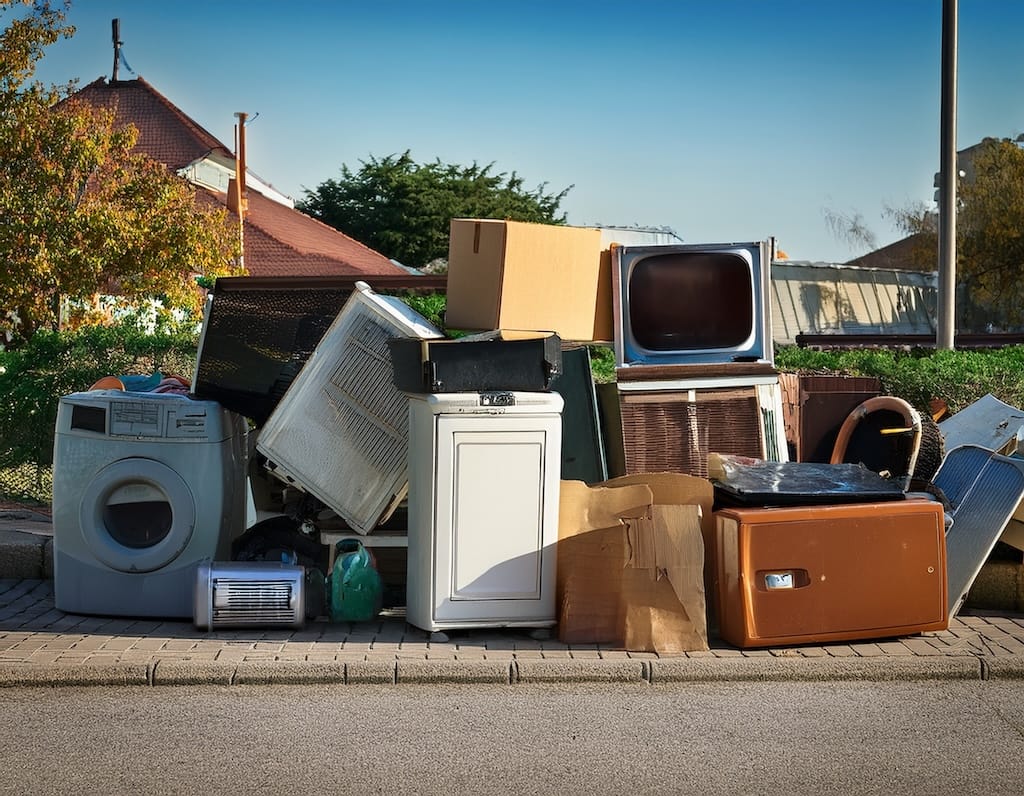
Whether you love knickknacks or just hate decluttering, it’s easy to collect rubbish, from the broken dining room table you hid in the garage to the old washing machine you pushed into the shed. You don’t have to wait for spring to launch a deep clean, and you don’t have to call the council or track down a skip either. 

The biggest drawback of using the council service is you still need to wrestle with heavy items and get them to the curbside for uplift. That isn’t the case when you use a reputable rubbish removal service like Cheapest Load of Rubbish, and their team will be more than happy to move items from their original resting place. 

Having a major clearout is as simple as going room by room to clear out what you no longer need before calling a rubbish removal service to haul it all away. Cheapest Load of Rubbish can take away old appliances, electrical items, old or broken furniture, mattresses, green waste, garden rubbish. No matter how big the job, we’ll have your rubbish cleared in no time! 

Once you know what you want to get rid of, call a rubbish removal service to ask for a quote. At Cheapest Load of Rubbish, we will send a team to your door to assess your rubbish and provide you with a free on-site quote. If you’re happy with our quote, we can start clearing your rubbish right away. 

Commercial 

If you’re moving to a new office and need to clear out the old one or prepare for the new one, commercial rubbish removal can help. If it’s a clean-out that’s gotten out of hand or a planned spring clean to prepare for a new financial year, a rubbish removal company can remove electronic waste, paper, cardboard, recyclable waste, office furniture, and we can also clear out facility storage units, too. 

With so many different rubbish items to sort through, the last thing anyone has time to do is figure out where each item should go. You don’t need to! You can call Cheapest Load of Rubbish and allow our team to sort through the rubbish; we are passionate about community and the environment and aim to recycle as much as possible. We always ensure the rubbish we remove is disposed of safely and legally. 

Construction 

Whether you run a tight ship on a demolition site, managing a new build or renovations, safety is paramount on every construction site. At Cheapest Load of Rubbish, our team is equipped, experienced, and trained to clear construction debris, from general building waste and site cleanups to hard access rubbish removal and more. We know that excess rubbish can cause potential hazards on a construction site, and not only will we clear it out, but we’ll recycle as much as possible, too. 

Our team is trained and knowledgeable to ensure your job site remains compliant while we work. With our affordable prices, you can’t afford to take a different cleanup path.

How Cheapest Load of Rubbish Can Help 

There are so many rubbish types to deal with, and many come with different disposal methods and safety measures. You can’t dump everything in the same bin, but you can use a reputable rubbish removal service, like Cheapest Load of Rubbish, to sort and recycle it for you. 

We’re becoming more environmentally conscious as a nation, and part of being a responsible citizen is ensuring you dispose of rubbish properly. Why not get in touch with Cheapest Load of Rubbish to handle your rubbish removal in Sydney? At Cheapest Load of Rubbish, we aim to recycle as much of the waste we uplift as possible, ensuring rubbish is dealt with the environment in mind. So, if it can be recycled, you can rest assured knowing we will recycle it. 

Whether you have old furniture and clothes cluttering your home, electronic waste around the office or your construction site needs a professional touch, get in touch with the team to arrange a free on-site quote. Our trucks are crewed by two members of the team, and they can start the job immediately if you’re happy with the vote.

Categories
Rubbish Removal

Dealing with Bulky Waste: Strategies for Disposing of Large Items in Residential Areas

Dealing with bulky waste requires more than just tossing it in a bin. While Sydney’s rubbish removal services have recognised this need for a long time, residents need to implement responsible disposal practices within the home as well. This means understanding the differences between specific types of bulky waste and choosing the proper disposal method. 

The New South Wales Environmental Protection Agency identifies several pollution streams from improper landfill disposal. Fortunately, with a “Reduce, Reuse, Recycle” approach and growing environmental awareness, we can mitigate these issues and contribute positively to Australia’s natural world. Here’s what you need to know.

Understanding Bulky Waste

Correctly disposing of bulky waste is one of the trickiest parts of proper waste management. Although some companies do rubbish removal in Sydney, few are willing to tackle the difficulties posed by bulky waste. 

Bulky waste is “items too large to be taken by regular waste management facilitators.” Many larger household items – including certain hazardous items – fall under the “bulky waste” category of waste disposal. 

  •   Furniture
  •   Appliances
  •   Construction Materials (wood, concrete, siding, plasterboard, etc.)
  •   Batteries (car, household)
  •   Electronics (computers, laptops, televisions, stereo systems, etc.) 

Unfortunately, living in an urbanised, residential neighbourhood sometimes means that Sydney’s council rubbish removal services aren’t available when you need them. Or, the collection times are limited by the municipality, so you can end up stuck storing bulky waste items in your garage, taking up much-needed space. 

This can also lead to the unfortunate scourge of illegal dumping – where individuals dump their bulky waste and other hazardous materials outside of the confines of a landfill, causing further damage to the environment. Be aware that the Government of New South Wales hands out hefty fines for anyone caught illegally dumping hazardous or bulky waste.

Responsible Disposal Strategies 

To combat the illegal disposal of household waste, and combat the mounting problems of over-flowing landfills, you need to adopt a “Reduce, Reuse, Recycle” methodology concerning waste disposal. Here are some strategies to implement when encountering bulky waste you’re unsure how to dispose of. 

The first question you should ask is whether the material can be used, recycled, or donated. For example, clothing can be donated to a local shelter or charity. Or, large furniture items in good condition can be donated to a family in need or sold for cheap. 

Other recyclables can include small household batteries (taken to a proper facility) and certain plastics. Contact your nearest recycling or Sydney rubbish removal service, like Cheapest Load of Rubbish, to see how best to dispose of whatever plastics you have. 

Certain construction materials, such as wood, could be donated to a local woodworking artist or reconfigured/cut down to make something new for your home. Scroll through Pinterest for ideas! Similarly, if you’re disposing of certain plain, undamaged metals, see if a local metalsmith might be interested in purchasing your waste metals. 

Unfortunately, not everything is salvageable and some things do need to be disposed of properly as bulky waste, either by your local municipality, or a waste management company that does rubbish removal in Sydney. These items are typically large appliances like fridges, freezers, ovens, washing machines. Construction materials like plasterboard, screws or nails, vehicles, and vehicle parts also fall under “bulk waste”.

Council Collection Services

No matter where you live in Australia, your local council will offer collection services for bulky waste. Below is a guide (by state) to collection services offered. 

  •   New South Wales operates a free bulky waste collection once per year, although these do not include commercial waste or construction-based waste. This does not include hazardous materials, such as chemicals or paints.
  •   The Government of Queensland has different regulations concerning the removal of general household waste, including recycling programs and disposal of chemical waste products.
  •   The Government of Victoria has leaned into the Circular Economy theory of waste disposal and has crafted legislation surrounding that theory, providing four new streams of recycling methods, in a bid to reduce landfill waste. This includes providing $34.9M over three years for an improved recycling infrastructure.
  •   South Australia provides collections of regular household waste and provides refunds of 10-cents per unit for recyclable bottles and cans, as well as other types of recyclable containers. They also have drop-off depots for paints and hazardous waste. Local councils in South Australia have different regulations. Check your local area before disposing!
  •   Similarly, Western Australia provides landfill levies for individuals seeking to get rid of their household waste – $85.00/tonne. However, they also provide construction and demolition goods collection, recycling, and food and garden organics kerbside collection services. This is a part of their Waste Avoidance and Recovery 2030 plan.
  •   The Tasmanian Government has also implemented Circular Economy protocols in their waste management and encourages residents to recycle wherever possible. The Tasmanian Government has also constructed a Waste & Resource Management Strategy.
  •   The Northern Territory and City of Darwin offer residential bin collections for household waste and recycling. Shoal Bay Transfer Station is a service provided by the NT Government, via a contractor, for hazardous waste management and disposal in the City of Darwin.


Recycling & Repurposing Opportunities 

Many recycling and repurposing opportunities exist for specific bulky items, such as mattresses, electronics and certain construction materials. 

Residents in the ACT, WA and NSW can drop off their mattress at a mattress recycling facility, for a fee. Similarly, electronics can be recycled on your doorstep, or taken to an e-waste facility

To avoid paying waste levies, residents of New South Wales can recycle many of the materials from their household renovation and deconstruction! To learn more, view this information booklet by the Government of New South Wales.

Disposal Regulations & Legal Considerations 

Wherever you live in New South Wales, you’ll have to abide by the disposal regulations of your council. Three acts under the Law govern Sydney residents. 

Potential penalties for violations of federal, state or local by-laws vary, but for residents of New South Wales, the fines imposed are: 

  •   $7500 on-the-spot fine for an individual for illegal dumping if issued by the EPA.
  •   $4000 on-the-spot fine for an individual for illegal dumping if issued by NSW Police.
  •   $1,000,000 fine and/or a 7-year prison sentence for individuals for willful disposal of waste causing actual or likely harm to the environment.
  •   $500,000 fine and/or a 4-year prison sentence for individuals for negligent disposal of waste causing actual or likely harm to the environment. 

It is really not worth dumping illegally when plenty of alternative waste disposal methods are easily available.

Eco-Friendly Alternatives 

As our awareness of climate change and its effects on our lives become more evident, Governments regionally and nationally are pushing for citizens to be more mindful of their waste management practices. When it comes to bulky item disposal, rather than throwing out the proverbial baby with the bath water, think about how you might reuse, repurpose or upcycle your bulky waste items. 

For example: let your kids create castles of their dreams with those leftover cardboard boxes! Use your leftover bricks from your home renovation as micro-green planters. Use that old pallet wood to create pallet wood furniture. 

Of course, for those goods you simply cannot upcycle, contact your nearest Sydney rubbish removal experts to help you safely dispose of that waste.

Community Resources & Events 

Know what your resources are around you! Research your local recycling centres. Be sure to take a tour if they offer them – bring the kids along to promote environmental consciousness in them! Participate in beach clean-ups. 

As the saying goes: “It takes a village.” And as this is our planet and our country, we all are responsible for its long-term environmental health and well-being.

Categories
Rubbish Removal

Educating Children on Residential Rubbish Removal: Teaching the Next Generation about Responsible Waste Disposal

Teaching children about personal responsibility can start with simple tasks like picking up rubbish and sorting waste at home. By introducing principles of respect for the environment early, such as through a ‘Leave No Trace’ game, children learn to be conscientious about their surroundings. 

This helps them grasp the importance of practices like rubbish removal in Sydney, fostering a respect for the environment that benefits both themselves and the planet’s future.

Understanding Waste and Its Impact 

Teaching your children about what waste is and how it impacts the world around it is the critical next step in their understanding of rubbish removal in Sydney and around the country and the world. They’ll learn the important concept of cause and effect – for example, a lesson on pollution when driving past buildings that billow smoke is also an opportunity for them to understand what happens to the air they breathe when things pollute the atmosphere. 

Another important concept for your kids to understand the importance of proper rubbish removal in Sydney is resource depletion. You can do this in many ways – but one of the best examples is for your children to learn about habitat destruction and connect that to the animal kingdom and its effect on cute and cuddly koalas or kangaroos. Children tend to connect with animals better than they do with statistics and information – and they’re much too young for catastrophic documentaries, so a simple picture book or a visit to a local zoo may be a good opportunity for them to learn this lesson.

Basic Principles of Teaching Children About Landfills, Recycling & Composting 

Some of the most important principles your kids will learn will be about recycling and composting food where possible. Following the ‘3 R’s’: Reduce, Reuse, Recycle. Here are some useful tips for teaching your kids about these principles. 

Reduce – A simple lesson could explain to your children that when you shop for groceries, you now use canvas-based bags rather than single-use plastics. Combine this with a lesson about what ‘single-use’ plastics are. Many educational materials available online provide easy-to-understand lessons for kids about single-use plastics. 

Reuse – A simple lesson on reusables for children could be sorting through clothes that no longer fit them and, providing they are in good condition, arrange for your child to donate them to a local charity personally or, if they’re not in good enough condition for them, give them to a local seamstress. This will teach them that clothing and other items can be reused rather than thrown away. 

Recycle – Recycling is perhaps one of the most important aspects of the three R’s and is a simple concept for children to understand. You could start with a basic lesson on plastics and how they harm our planet if left unrecycled. You could familiarise them with the recycling symbol by having them participate in drawing and painting the recycling symbol to prompt them to recognise it when in public. 

You could also start by teaching them what materials are recyclable and which aren’t. Contact your local recycling plant to see if they offer any kids’ tours of the facility. This will give your children a more well-rounded picture of the recycling process and teach them the importance of recycling.

Teaching Your Children About Landfills

Landfills are an unfortunate fact of human consumption. Despite over half of all Australian waste being recycled in 2020, according to the National Waste Report, over 40% of Australian waste went to a landfill. You can easily explain to your children that landfills are where waste that cannot be recycled ends up, providing examples of this by showing them things that cannot be recycled or may contain toxins, such as polystyrene, batteries and bubble wrap (but it can be used as a toy for your kids (if annoyingly).

Age-Appropriate Education Strategies 

As your children develop, their sense of what constitutes proper rubbish removal in Sydney will change, and their understanding of Sydney’s rubbish removal system will form. You’ll want to develop age-appropriate education strategies for your kids to learn as they age, always instilling a sense of responsibility, regardless of age. 

You can combine hands-off and hands-on approaches to teaching kids about the environment. Create recycling scavenger hunts around the home or yard – even make it competitive if you have more than one child. As they age, you could have them participate in a community beach clean-up to teach them the importance of environmental stewardship as a community effort and about ‘doing their part.’ This will give them a sense of responsibility personally and as part of a broader collective. 

When it comes to rubbish removal in Sydney, composting is the final important aspect of being a good steward of rubbish removal as a youngster. Understanding the concept of compost and regeneration could be as simple as starting a small garden at home and beginning by having the kids take the compostable waste and throwing it on your at-home compost pile. If you don’t have a compost pile at home, having the kids start one is another option, or visit places like IDigCompost Community Compost in Thornleigh, where they’ll learn about composting and participate in compost-centric activities.

Hold Periodic Waste Audits 

One activity you can do with your kids is a small-scale monthly or weekly personal waste audit. Have them sort their personal waste in their bedrooms (minus the compostable stuff) into their respective bins and have them empty them into the family waste bin at the end of each week. Keeping track of their waste and disposing of it independently is a great life-lesson that encourages personal responsibility and mindfulness – great for any child over five and continuing as they mature. 

As they age, have them participate in the weekly taking out of the trash at the proper times and ensure that they take out the right type of waste each week for rubbish removal in Sydney. This aids them in memorisation, personal responsibility and thinking before they throw things away. 

Learn Through Books, Films and Other Educational Material 

Children learn through reading, watching and doing! You can find excellent educational reading material at your local library or even at your kid’s schools that teach your children about the importance of recycling, environmentalism and proper rubbish removal in Sydney. 

Practice Makes Perfect & Family Habits

As with most things in life, practice makes perfect, and it’s only through practising recycling, reusing and composting will your children learn proper rubbish removal practices in Sydney. Developing these as a matter of family habits and holding each other accountable is a great way to teach personal responsibility and accountability to your kids in the context of a fun family activity. 

However you choose to teach your kids about rubbish removal in Sydney, educating them in a fun, entertaining way with an invaluable life lesson at its core will stand them in good stead as they mature into environmentally-conscious adults.

Need rubbish removal in Sydney? Contact Cheapest Load of Rubbish today!

Categories
Rubbish Removal

Organising Tools and Equipment: Efficient Storage Solutions for a Tidy Garage

A clean garage not only looks good but also enhances functionality and efficiency. With proper organisation and quality storage solutions, you can easily locate tools, have more room to work, dispose of unwanted items, and even inventory your possessions. 

Efficient storage isn’t just about organisation. It’s also about saving space and easy access to your tools. Here’s what you need to know about efficient storage for organising your garage space.

Assessing Your Needs 

Your first step in organising your garage into an efficient space is to empty it! Working with a blank canvas (as much as possible) will help you see what your space looks like when it is empty and conceptualise what it could look like more easily. If you don’t have the luxury of emptying your garage, move as much as you can outside and/or away from the walls. 

The open space will allow you to see what you’re working with and design the garage of your dreams from scratch. During the clear-out, you’ll be able to assess what your tool quantity is, if you’re missing anything critical and if any are broken that need to be (or can be) repaired or replaced. Make a list! This will help you be more organised when reconstructing your space. 

Any large tools that are broken (air compressors, etc), or any large pieces of furniture that are beyond salvaging can be picked by a company that offers rubbish removal in Sydney. If you come across items like this, set them aside and arrange for collection. 

Categorise your tools based on how frequently you use them and their size. This will help you re-stock your garage efficiently when the time comes.

Decluttering and Sorting 

Before you organise your tools, you’ll want to find an effective method of decluttering them. Perhaps you have old tools you’d forgotten you owned or two of the same type of tool. Or, you were gifted a tool you already owned for Christmas without the heart to throw it out. Either way, why would you need two of the same type of tool? Be gone! 

This rather brutal decluttering will help you sort through your tools much faster before organising your space. The categorisation will help you once you’ve decluttered! We suggest the following categories: 

  •       Hand tools
  •       Power tools
  •       Gardening Equipment
  •       Hardware 

Sorting things in this way is simple and makes things easier when it comes time to store your tools.

Wall Storage Solutions 

Wall storage solutions offer some of the most efficient use of ‘dead space’ in a garage. Walls aren’t often thought of as options for storage solutions. But they can be some of the most potent and space-conscious storage solutions. 

Figure out what you will store on your walls – you can buy wall-mounted bike racks, or mount tools on the wall using hooks (if your power tools have the appropriate handles). Lightweight items such as fishing rods can be stored on the wall. You don’t want to store any heavy items on your walls – so push mowers and heavier grass trimmers shouldn’t be stored vertically. Aside from the risk of injury should they fall, they can compromise the structural integrity of your garage and reduce the aesthetic appeal. 

Efficient wall storage solutions include: 

  •       Pegboards
  •       Wall-mounted shelving
  •       PVC Slatwall Systems 

These are great for storing smaller tools like hammers, staple guns, drills, etc.

Utilising Shelving Units & Cabinets 

Shelving units and cabinets provide the ultimate wall-backed storage system – and you’re not restricted to one type of cabinet. If you use your garage for specific functions like a mechanic workshop for a small-engine repair side hustle or light in-home construction, you may need more heavy-duty cabinets than others. Cabinets like these can vary in size and price as they are made with different materials. Some offer locking systems, roller drawers, and waterproof and/or fireproof features. 

When it comes to shelving units, you’ll want to decide what type of shelving units you want – metal or wood – and whether you want them to open-concept shelves or be enclosed shelves. They also come in variable heights and are often adjustable. Having shelving at head height is probably the safest option, although you lose the convenience of being able to store lesser-used items higher and lose space on the lower shelves. 

When throwing out the old cabinets (if you’re remodelling), contact Cheapest Load of Rubbish to collect the old, rusty metal cabinets. 

Maximising Vertical Space 

If you have a smaller garage by square footage but with a high ceiling, you’ll want to maximise your vertical space and use it intelligently. This could mean leaving the ceiling open – rather than putting in a loft space and storing excess lumber in the rafters. Or, if you’d rather finish the ceiling, you can use overhead storage units or ceiling-mounted racks for things like bicycles. 

Making the most use of your vertical space will help free up floor space for a small table and some chairs for card games or just a space to relax inside the garage. Or to use as a dedicated workspace. As with any overhead storage unit, safety should be your top priority. Ensure your overhead units are installed (or at least checked over) by a professional.

Toolboxes & Portable Storage 

When it comes to your garage, there’s probably no more quintessential item than a toolbox or two. Toolboxes and portable storage are the backbone of any workman’s garage. Toolboxes come in various shapes and sizes and are sometimes made of plastic or metal – newer toolboxes tend to be made of plastic. They should be used for the most common tools you always need access to, as well as smaller hardware like nails, screws or mounting hardware such as L-brackets or hinges. Consider that you may need to take your tools to a job site, so choose a toolbox that will be easy to transport, pick up and move around. 

Toolboxes can be stored on shelving or the floor and are generally easy to move around your garage. 

If you have an old toolbox that’s been dropped one too many times and is cracked or otherwise broken beyond repair, don’t forget to set it aside for collection by rubbish removal in Sydney, along with some of your other broken tools.

Labelling and Organisation 

One of the most important next steps in your garage makeover is to ensure that you label your storage areas or containers. This will help you locate your tools faster and with ease. Print your labels and laminate them if possible – this will waterproof them and protect them from environmental damage. Be sure to use a command strip or glue to stick them more permanently to the surface – and ensure that the surface has been cleaned. 

You can create clear labels simply with the wording for the tool or hardware – for example, your 4×3/4’ wood screws could be labelled as such. Alternatively, though perhaps more complex, you could use a colour-coded system – all hardware is tagged with a green label, whereas all drill bits are tagged with a blue label and so on. While colour-coding can be slightly less specific an organisation technique, if it works for you, it works for you! 

In whatever way you decide to organise your tools, having an effective labelling system is paramount to bringing order to chaos. If you had your tools and hardware spread everywhere before re-organising, the last thing you want to do is return to that hellscape of lost bits and missing screws.

Safety Considerations 

As with any space in your home, you’ll want to ensure that everything you put up in your garage is safe for use and for others to be around. Whether you’re storing potentially hazardous chemicals like propane tanks in a cabinet, use overhead storage systems or have tools with sharp points. All should be stored securely and safely, and all possible safety measures should be implemented for hazardous materials. 

Remove blades from tools like electrical saws, use sheaths for knives and other bladed instruments and store them in an enclosed toolbox. Keep screws and other sharp-point hardware in a locked toolbox. You should also mount cabinets directly into the wall to prevent them from tipping over. If you use oil or slick material in your day-to-day work, clean it up immediately or use a powder-based substance to absorb it, if necessary. 

If you have old, rusty saw blades or knives, or other sharp objects lying around, get rid of them! Nobody wants to cut themselves on a rusty and risk a tetanus infection. 

Even if you’re just an at-home tinkerer and have visiting family, friends, or children, ensuring their safety and yours in your garage is paramount. Don’t skimp on safety to save money when purchasing new lockable toolboxes or cabinets!

Maintenance and Regular Organisation 

Now that you have a freshly organised space, it’s up to you to keep it that way! Whether your organising took you one hour or one day, keeping the space clean and organised in the way you want, will help your peace of mind, productivity and the overall functionality of your garage. 

Taking the time to re-organise will allow you to take stock of what you have but don’t use and can give away or throw away (using Cheapest Load of Rubbish’s dedicated Sydney rubbish removal service). 

Whether you’re a work-from-home mechanic, carpenter, metalsmith, or just a person who likes to keep things in their garage, an organised space will help you to be more productive. Spend a weekend re-organising and re-imagining your workspace as a peaceful, calm, efficient and effectively organised garage, then make it so by implementing some (or all) of our tips!

Categories
Rubbish Removal

The Benefits of Commercial Recycling Programs: Maximizing Resource Recovery and Cost Savings

Despite the rise in recycling habits among Australian households, businesses lag. With 27% of waste ending up in landfills, commercial waste contributes significantly to environmental damage. 

The government’s Business Recycling Program and commercial rubbish removal services in Sydney can help businesses mitigate this issue. These programs provide the necessary tools and knowledge to effectively reduce, reuse, and recycle waste. These initiatives have led to a 76% recycling rate, particularly in the construction sector. Let’s look at how these programs are helping businesses reduce waste.

Environmental Benefits of Commercial Recycling Programs 

Companies that practice the “3 R’s” contribute to the following environmental benefits: 

Reduction of Carbon Footprint 

One of the most important aspects of commercial recycling programs and proper rubbish removal in Sydney is the reduction of a company’s overall carbon footprint. As an estimate, construction companies contribute roughly 30 to 50 million tonnes to Australia’s carbon footprint (CF) annually. By choosing to participate more enthusiastically (with policy changes) in a Business Recycling Program, companies could reduce their overall carbon footprint. 

Reducing Landfill Waste 

Another important recycling aspect is reducing waste at any of Sydney’s three landfills. By choosing to recycle raw products – such as wood – companies can greatly reduce the amount of waste in a landfill. Construction and demolition companies accounted for 45% of Australia’s ‘core waste’. However, recycling and Sydney rubbish removal companies could recycle more than 50% of that waste. 

By recycling things like wood, bricks, glass, insulation and certain plastics, companies can greatly reduce landfill waste. 

Conserving Natural Resources 

As we all know, Australia’s natural resources are under threat. Between wildfires that ravaged the country and destroyed 18 million hectares of bush in 2019-2020 and man-made destruction, it’s more important than ever that businesses become more conscious of conserving our national natural resources. 

The more companies that use the Business Recycling Program can reduce their waste, reuse what they can and recycle the rest, the less raw materials we’ll have to take from the land. This principle will help create a more stable circular economy.

Resource Recovery & The Circular Economy

Resource recovery is the process that waste undergoes to recycle- essentially taking a waste product and turning it into something useful – thereby recovering that waste product and harnessing it to create new resources. These resources are often extracted from wastewater, sewage slurry, fecal matter and human excreta. A good example of resource recovery is using cow and sheep manure on garden beds to improve soil health and grow more flowers or food. 

Many micro-nutrients like sulphur, nitrogen and potassium exist within the above-mentioned examples and if those can be extracted through resource recovery processes, achieving a 90% diversion rate from landfills. 

Cost Savings & Economic Benefits


As a business, one of your purposes has to be to turn a profit. By participating in a business recycling program, you’ll see how much money not using proper rubbish removal services costs your business annually and how much money you might save by participating in a Business Recycling Program. 

As a snapshot, the mining industry produced 620 million tonnes of waste in 2020-2021, most of that was slurry made from pulverised rock and water. How much of that waste cost to mining businesses could have been saved by treating their waste differently? 

Using commercial recycling programs, your landfill levies and waste disposal fees could drop significantly, saving your company hundreds of thousands or millions of dollars annually. 

Apart from cost-saving, your business could profit from selling recycled materials. Depending on your business structure, this may be easier said than done, but it is certainly possible. 

Streamlining a waste management system by introducing recycling and reusing options into your company’s waste management could improve your operating efficiency. Rather than having to call up a rubbish removal company, wait for them to have an available vehicle, and wait for them to come and collect the waste and then pay their disposal fees.

Having a recycling plan in place could mean increasing your efficiency by introducing ongoing recycling processes into your business workflow.

Compliance with Regulations and Corporate Social Responsibility

As a business, you have a specific set of legal requirements to meet regarding environmental regulations – these include federal, state and municipal regulations on waste management. These include waste reduction targets and periodically checking (and adhering to) waste management rules in your state. Not only are you legally bound to adhere to environmental regulations, but you have a moral and ethical obligation to adopt a Corporate Social Responsibility doctrine as a business.

Tailoring Recycling Programs to Business Needs

One of the great things about Commercial Recycling Programs is that they can be tailored to the needs of your specific business. Coming up with a recycling program that works for your company requires forming a plan that specifies what you’re going to be recycling, how it will be recycled or reused and when the collection of recycled materials will occur. 

Sydney rubbish removal services can be requested on specific days of the week for specific recycled items (or a bulk collection of many recyclable items). For example, suppose you’re a home appliance maker. In that case, you’ll find that you have a lot of metal waste – this can be recycled – you’ll need to create a plan for recycling this material and contact Cheapest Load of Rubbish, your local rubbish removal company in Sydney to find out how we can help. 

Alongside tailoring recycling programs to your business needs, planning and executing these programs successfully requires waste audits and team meetings about recycling and your company’s recycling goals, along with clear objectives and reinforcement of the positives of being environmentally conscious on a company scale. 

Periodic waste audits can be done in partnership with waste collection providers. These periodic audits will ensure that you’re not missing opportunities to recycle waste products and that you’re meeting company waste management targets. 

Once you have these programs in place, you must inform and educate your employees about the programs to encourage recycling and ensure the three R’s stay fresh in mind as they go through the workday.

Collaboration with Recycling Service Providers

It’s important that you build positive relationships with Sydney’s rubbish removal services, as you’ll need to find one that works best for your business model and could be hugely beneficial, should your collection needs change over time. 

When it comes to choosing what provider is right for your waste collection needs, it’s important that you do your research thoroughly and consider the following factors: 

  •   Does the company provide the services I’m looking for?

    Choosing an all-inclusive Sydney rubbish removal service (if that’s what you need for your business model) is far better than paying for and working with different service providers. Find one that does it all!
  •   Choose Certified Experts

    All rubbish removal in Sydney must be done by certified Sydney rubbish removal experts – these are nationally-recognised and accredited companies. Check that the company you’re using falls within these guidelines. Cheapest Load of Rubbish is one of your best options for rubbish removal companies in Sydney.

Measurement And Monitoring 

Finally, while you can encourage fun and games in the office to jog people’s memories about the importance of recycling, you should also track your company’s progress in changing its ways.  As a part of this progress-tracking, define your areas for improvement – in conjunction with advice from Cheapest Load of Rubbish, Sydney’s rubbish removal specialist. This will help you see where you’re falling short. 

Finally, take note of what success looks like. You can use a few different metrics to measure your success in your commercial recycling program. Keeping track of how you’re doing as a company will help you move forward and explore either new ways to recycle more products or how to reuse certain products differently to make a profit and save the planet at the same time.

Categories
Rubbish Removal

Why Furniture Rubbish Removal Is Essential For A Sustainable Lifestyle

Adopting a sustainable lifestyle involves more than just recycling and conserving energy; it extends to responsible furniture rubbish removal. Improper disposal not only leads to substantial fines but also poses severe threats to our environment. Make a conscious effort to handle your furniture waste responsibly and contribute to a greener future. Here’s what you need to know.

The Environmental Impact of Improper Furniture Disposal 

Furniture is made using a wide variety of materials, from plastics and metals to synthetic textiles, foams, and fillings. There is often treated timber, as well as board. These are not typically biodegradable materials, and many of them contain chemicals that are dangerous to the environment. Some of them break down into smaller pieces and enter the environment, which can leech into waterways, poison soil, and end up becoming part of the food chain for animals and humans. 

As these materials are slow to break down, they quietly create greenhouse gases and release toxicity into the environment over a long period of time. It makes them much more dangerous than other items. 

The Benefits of Responsible Furniture Rubbish Removal 

  • Reduction of landfill waste

One of the most obvious benefits of responsible furniture rubbish removal is that it reduces how much waste ends up in our landfills. The less we send to the landfill, the less strain we place on landfill space which is already limited. However, it’s also good news for emissions because, with items disposed of properly, we are reducing greenhouse gases and the environmental impact. All in all, that helps preserve our natural resources and minimises pollution and its impact. 

  • Promotion of recycling and upcycling

A great way to dispose of furniture properly is to recycle or upcycle it. Calling a company experienced in rubbish removal in Sydney is a great way to make sure your old furniture is recycled properly. The benefit of recycling furniture isn’t just protecting the environment from carbon emissions or even just saving landfill space. It’s also an important step in conserving energy because there is less need for new resources when we reuse the existing resources. You can also opt for upcycling, repairing and repurposing is a great way to create unique pieces and breathe new life into furniture that might simply need a facelift. 

  • Supporting the circular economy

Recycling or reusing furniture supports the circular economy – it’s a responsible way to ensure that we reuse, repair, or repurpose our existing resources. It has a positive impact on the environment and is an important step in living a sustainable lifestyle. Every piece of furniture that is reused, repaired, or repurposed instead of being discarded contributes to the circular economy. 

Sustainable Alternatives to Furniture Rubbish Removal 

  • Donating furniture

If you are clearing out or moving on and you have old furniture on your hands, don’t dispose of it! Instead, you can donate it – whether you hand it over to a community organisation, drop it at the op-shop, or gift it to a shelter. Many organisations are happy to pick the items up, which gives you one less job to think about. ReLove, St Vincent de Paul, and The Bower are all excellent options for a range of goods. 

  • Furniture repair and refurbishment

Furniture is built to last, and as long as it’s well taken care of, you can continue using it for years. Chips, knicks, and scratches add character and even cheap pieces can be repaired or refurbished. The old bookcases in your living room might not look great in your new house, but you can repaint them and use them as toy storage, organise your pantry, or even in the shed or garage to organise tools and equipment. By extending the lifespan of your furniture, you save money on purchasing new items and you reduce the amount of waste that ends up impacting the environment. 

  • Selling or exchanging furniture

Whether you are downsizing or renovating, your furniture may not work for you anymore. In this case, rather than getting rid of it, you can sell it or try to exchange it with someone. You never know who is looking for what you have and has exactly what you need. There are plenty of community swap events and online marketplaces where you can make trades. Additionally, you can shop in thrift stores instead of buying new furniture when the time comes. 

Responsible Furniture Removal 

Calling in the professionals is a great way to dispose of all your furniture without worrying about where it ends up. Be sure to choose a reputable company that prioritises recycling, proper waste management, and donation is an important part of the process. So, when you reach out for quotes, be sure to ask about their processes so you know you can trust them to do the job properly. 

As your local Sydney rubbish removal team, Cheapest Load of Rubbish can help you haul your old furniture away. We are passionate about rubbish removal in Sydney – not only do we care about our community, but we also care about the environment. So, we are committed to recycling up to 80% of the items we uplift. Our team is trained and experienced in separating waste to ensure we deliver as little to the landfill as possible.